

By OECD Director for Education and Skills Andreas Schleicher
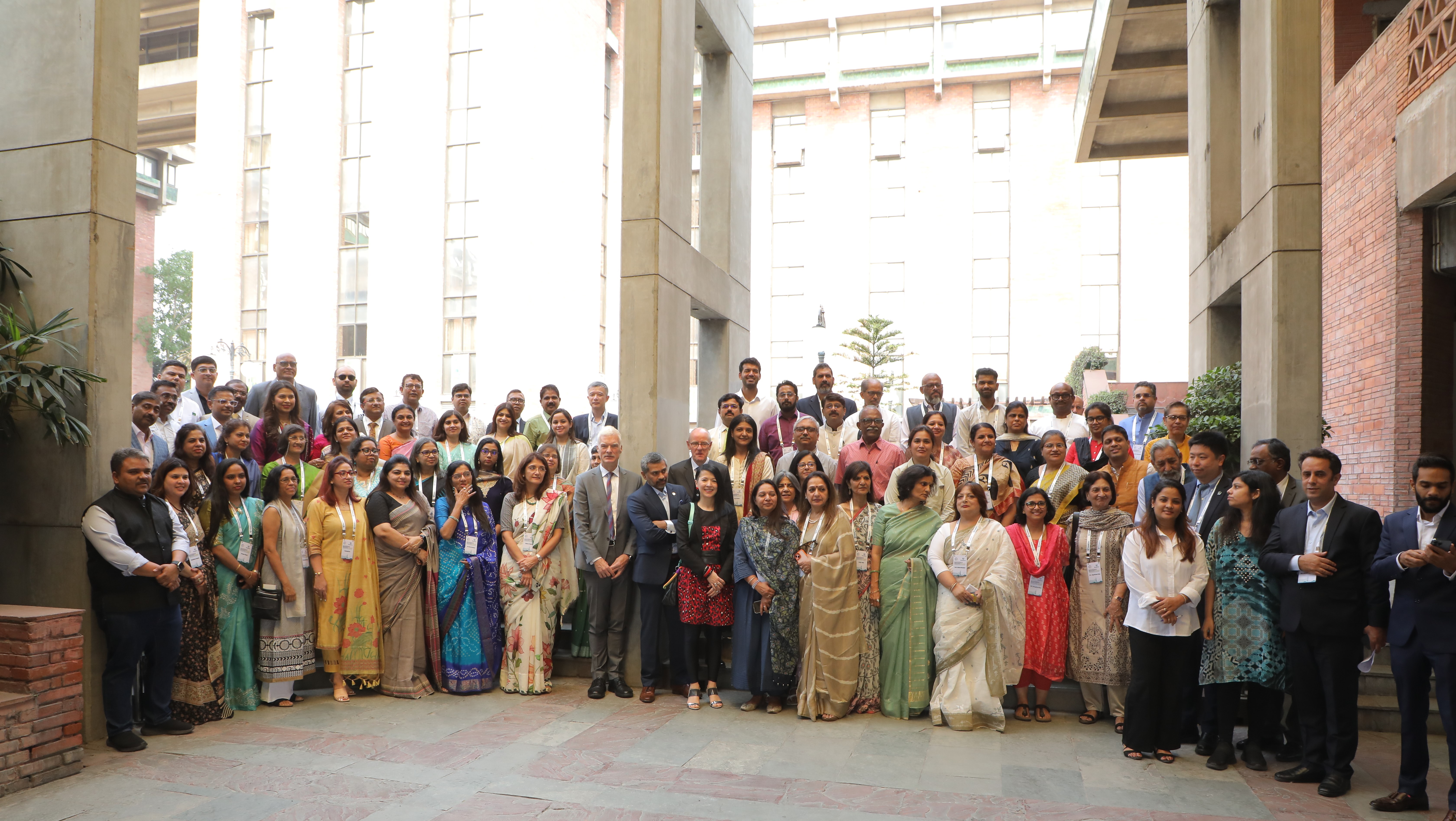
Yesterday, I joined an inspiring group of educators, policymakers, and global experts at the Annual PISA for Schools Summit in India. Hosted by ExcelOne, this event celebrated a significant milestone—the completion of the first cycle of India’s private schools participation in PISA for Schools.
India possesses extraordinary talent among its educators and students, yet this talent remains underrepresented on global educational platforms. The PISA for Schools programme provides a unique opportunity to change this. Building on the OECD’s internationally-recognised Programme for International School Assessment (PISA) model and data, it allows individual schools to benchmark themselves against global standards, thus providing a clearer picture of where they stand in the global education landscape.
During the summit, Shri Sanjay Kumar, Secretary of India’s Department of School Education & Literacy, underscored the country’s commitment to harnessing data-driven insights to advance educational practices aligned with NEP 2020. His message emphasised that India’s educators already possess the expertise and the insights needed for excellence. The challenge—and the opportunity—is to scale these insights systematically and to all students across the country.
The results from India’s first cycle of PISA for Schools are promising, and many Indian students and educators are making progress. Now is the moment to turn this potential into a powerful driver of nationwide educational progress.
It was useful to hear the international perspectives shared by Sir Nick Gibb from the UK and Dr. Kraiyos Patrawart from Thailand. Their reflections reminded us that while contexts may vary across countries, the principles of good education—student-centred learning, innovation, and evidence-based policy—are universal.
The event was also a platform for diverse stakeholders—from the World Bank and Central Square Foundation (CSF), to PARAKH, CISCE board, and associations like ARISE India and TAISI—to come together. These collaborative discussions highlighted the critical role of partnerships in achieving sustainable educational improvements. Dr. Indrani Bhaduri, CEO and Head of PARAKH, eloquently discussed ongoing efforts to operationalise NEP reforms across various educational boards. Mr. Vinesh Menon from ARISE India and Mr. Syed Sultan Ahmed from TAISI underscored the importance of bringing varied perspectives into conversations about educational change.
At the OECD, we believe that the value of PISA for Schools is not just comparison—it’s a catalyst for introspection and growth. For India, participating in PISA for Schools means that schools can reflect deeply on their educational practices, measure their outcomes against global standards, and chart their paths toward continuous improvement.
The experience from Cycle 1 has shown that Indian schools are well-positioned to harness their internal expertise. The next cycle of the programme, which is now open for registration, promises to expand this momentum even further. We hope that more Indian schools will join this journey of benchmarking, reflection, and transformation.
