


By Wendy Kopp, CEO & Co-founder of Teach For All
This blog is based on reflections shared by the author during the OECD Education Policy Reform Dialogues 2024 event (25-26 November 2024) where the OECD launched the report Education Policy Outlook 2024: Reshaping Teaching into a Thriving Profession from ABCs to AI.
Standing close to the ocean’s edge in Kawakawa, Te Tai Tokerau, New Zealand, a group of 15- and 16-year-olds fly a drone over the waves, mapping the spread of an invasive seaweed called Caulerpa. It is part of an innovative lesson to teach students about climate change. The fast-growing algae has been threatening the marine environment along parts of the country’s coast, and their teacher has tasked them with determining the best way to extract it.
Engaging students in green issues and showing them they can make an impact can be challenging, their chemistry and robotics teacher Jay Vijayakumar told me. Through Ako Mātātupu, the Teach For All network partner in New Zealand, Jay has led his Grade 11 classroom and collaborated with other teachers at Bay of Islands College to use technology and artificial intelligence (AI) in problem-solving.
Teachers like Jay demonstrate how creative learning experiences can support complex problem understanding and solutions development, particularly through the use of technology and AI. Jay was quick to highlight to me their role as tools for inspiring meaningful, personalised learning and deeper thinking among students. AI, he told me, requires students to sharpen their understanding as they improve their ability to prompt effectively. For Jay himself, AI saves time by generating lesson plans and feedback reports, and his use of technology and AI has inspired other teachers in his department. Jay has also created a website to ensure all his students — many of whom face significant barriers to attendance, such as long commutes and the need to balance work with school — can access all class materials remotely. He even leveraged AI to code a test prep app tailored to his students’ needs.
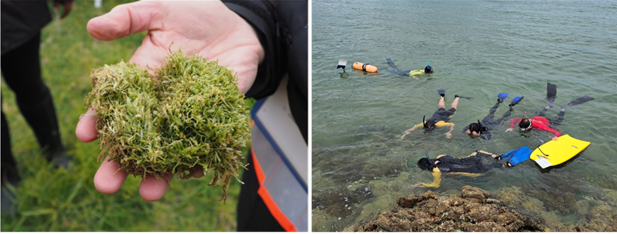
Image 1: Jay’s students with a sample of the invasive Caulerpa Image 2: Jay’s students extracting the Caulerpa
Jay’s example illustrates the potential of AI and technology, while highlighting that these tools can’t replace great leaders in teaching. It’s essential to attract exceptional educators and support them in preparing students to shape a better future.
A decade ago, across the Teach For All network we realised that achieving global aspirations for peace, justice, and sustainability requires equipping students with the agency, awareness, connectedness, mastery, and wellbeing to navigate and lead in a complex world. We launched the Global Learning Lab to study thriving classrooms, resulting in the Teaching as Collective Leadership framework, which fosters everyone’s leadership in the classroom, from the students to the teachers themselves.
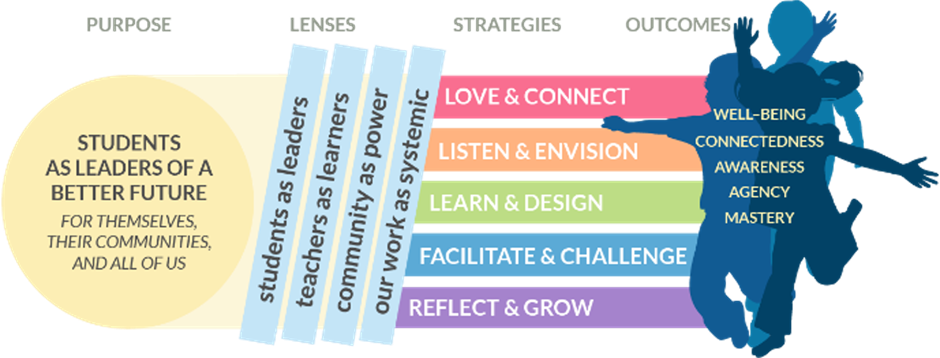
In classrooms like Jay’s, teachers focus on fostering their students’ ability to shape a better future, equipping them with the agency and awareness to address real-world challenges. They create environments rooted in trust and collaboration, co-creating visions for learning with students, and engaging them in hands-on problem-solving. Jay’s “family-like” classroom, built on strong relationships and shared goals, exemplifies this approach.
Teachers like Jay see themselves as learners alongside their students. They see their students’ potential to lead and recognise the assets within marginalised communities, a largely Māori population in Jay’s case. They also understand the systemic barriers students can face and leverage technology to create solutions.
Our work shows that transforming teaching for the future requires supporting educators to “unlearn” how they were taught and instead embrace new perspectives. This will position educators as key players for nurturing students who can shape a better future which, in turn, will help attract creative and committed leaders to the teaching profession.
We must also rethink teacher development, starting with fostering new mindsets and relationships with students and communities. By embracing technology, we can support holistic student development. AI can help deepen student engagement, personalise learning, and save teachers’ time. Investing to ensure teachers are comfortable with experimentation and innovation is also essential to ensuring the benefits of technology.
None of this will be easy or quick. However, by supporting the development of more teachers like Jay, I am confident we can nurture a dynamic teaching profession that complements and leverages an AI-enhanced world. This will also inspire more children to tackle real-world issues – like the spread of invasive seaweed!
