By Dr Mark Chetty, National project manager for TALIS in South Africa
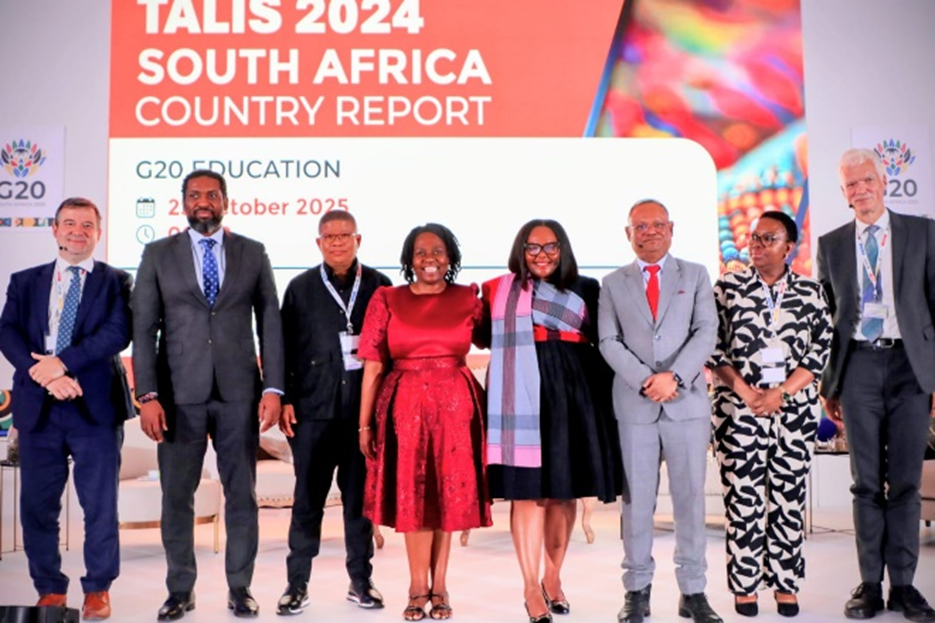
At the Skukuza Safari Lodge inside Kruger National Park, famous for its renowned safaris, education ministers and hundreds of educational experts convened to discuss how to improve teaching in South Africa. The meeting took place just after the G20 Working Group, with a focus on how teachers and school leaders can be architects of learning environments.
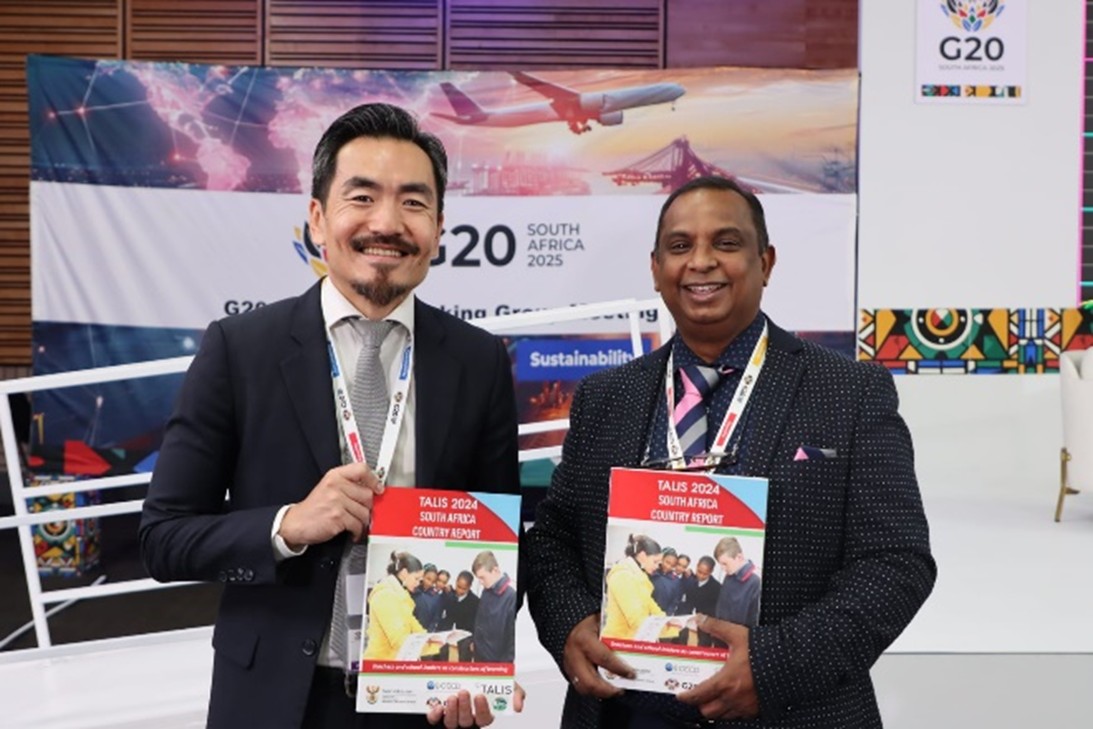
The reason for holding the meeting now? The launch of the results from the Teaching and Learning International Survey (TALIS) – the largest teaching survey in the world – which revealed some of the strengths and weaknesses of the teaching profession in South Africa. The country first participated in the survey in 2018, and the new 2024 survey allows policymakers to have data to provide valid, timely and comparable information to review and define policies for developing a high-quality teaching profession.
The TALIS results are a “mirror” through which the education system can reflect and “improve its core business,” stated the country’s Minister of Basic Education Siviwe Gwarube and Buti Manamela, the Minister of Higher Education and Training. Overall, the results underscored the South African Department of Basic Education’s commitment towards uplifting teacher professionalism and development at lower secondary, they said.
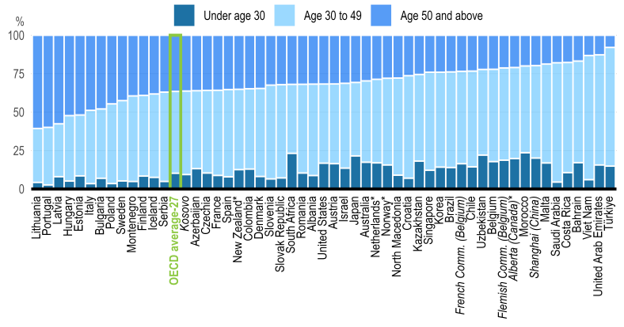
The teaching profession in South Africa remains satisfactory and stable, with a younger cohort of teachers compared to other global systems, according to TALIS. The average age of South African teachers decreased from 43 years to 41 years between 2018 and 2024. This compares to the OECD average age of 45 years old. According to TALIS, the South African schooling system has made inroads in terms of attracting youth into teaching, with the highest percentage of teachers under the age of 30 years (see figure below).
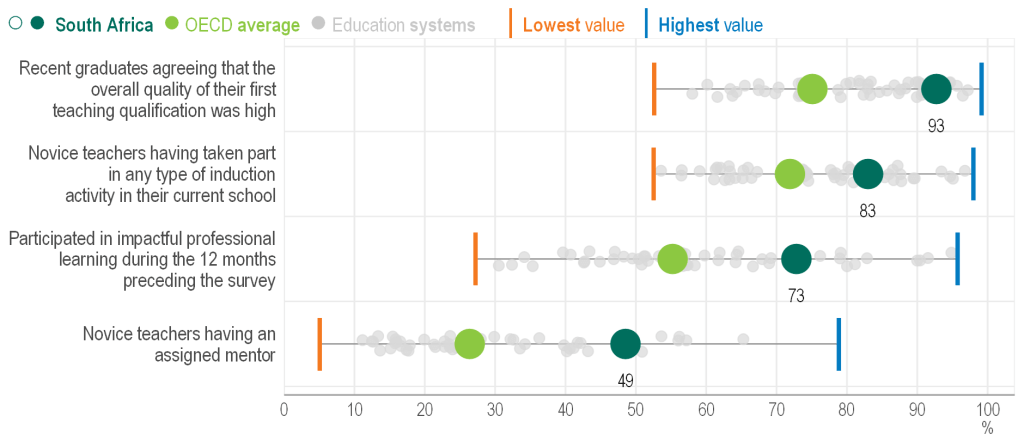
As the national project manager for TALIS in South Africa, I shared the various opportunities for novice teachers to learn in the workplace. For example, the share of recent graduates who reported that their initial teacher education prepared them well in subject content (83%), general pedagogy (85%), teaching in a multicultural or multilingual setting (77%), using digital resources and tools for teaching (75%) and supporting students’ social and emotional development (72%). Overall, more than 93% of novice teachers were satisfied with the quality of their first teaching qualification (see figure below). However, the share of recent graduates feeling prepared for subject content decreased by 6 percentage points between 2018 and 2024.
In an era defined by rapid technological change, evolving learner diversity and increasing societal complexity, TALIS offers insight into how the roles of the teacher and the school leader are being fundamentally redefined. Increasingly, teachers are expected to do more. For example, acting as adaptive designers of learning and cultural facilitators. This complexity requires teachers to move beyond content delivery to master advanced pedagogic techniques such as differentiated instruction and linguistic scaffolding. All this has resulted in a higher teacher workload, making classroom dynamics more complex. Continuous upskilling and professional development in adaptive pedagogy and digital integration is therefore even more important.
The OECD’s Director for Education and Skills Andreas Schleicher pointed out that teacher training gaps do persist, partly due to the changing demands of the profession. Only two-thirds of primary teachers in Sub-Saharan Africa meet national standards, he said. According to TALIS, teachers in South Africa require more skills to teach students with special education needs or whose home language is different to the language of instruction; as well as training for using artificial intelligence for teaching and learning.
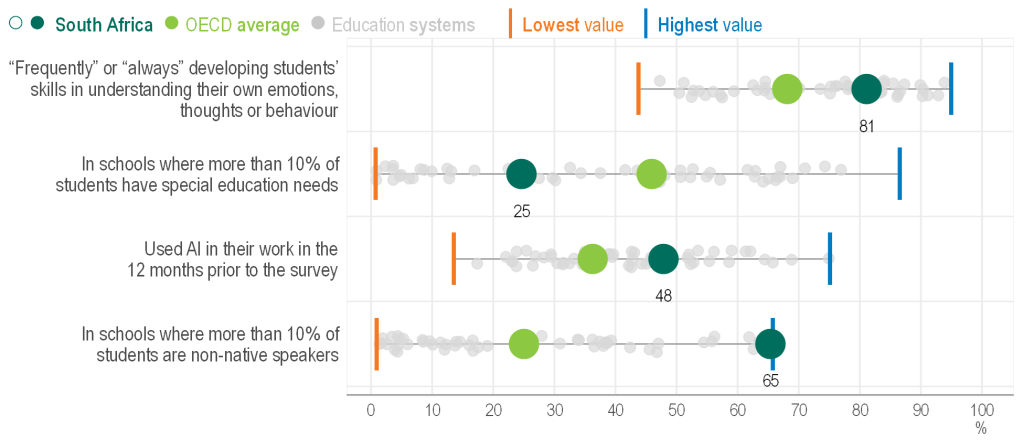
The report recommends higher education institutions involved in pre-service education to interrogate their teacher training models, to ensure teachers are equipped with the skills needed to elevate the standard of classroom practices.
Teachers and principals working in schools providing lower secondary education in Grades 8 and 9 took part in the survey. South Africa has maintained high participation rates, according to TALIS, a testament to the commitment of educators to improving the quality of education. The role of Higher Education Institutions in developing a skilled teacher workforce for the demands of today’s classroom were discussed at the launch, as well as how to harness our collective knowledge of multifaceted teacher dimensions to transform classroom pedagogy.
At the launch event, Ministers Gwarube and Manamela endorsed the TALIS findings, saying they will ensure their departments work together to strengthen the teacher workforce. They also congratulated the OECD on the TALIS report, which will assist South African decision makers to address learning deficits and professional growth points among teachers. Minister Gwarube concluded by emphasising that participation in TALIS and its outcomes are vital to understanding and supporting teachers as they build meaningful bridges for their learners.