


The importance of teacher knowledge: Insights from the new OECD Teacher Knowledge Survey
22 April 16:30 CEST
How do teachers know how to teach effectively? How do they keep students focused on learning, even at the end of a long school day? How can we motivate students, especially those at risk of falling behind? How do we assess them and give useful, actionable feedback?
Knowledge of teaching and learning, also known as general pedagogical knowledge (GPK), can help teachers answer all of these questions. But what do we really know about teachers’ GPK? For the first time, the OECD has international evidence on this. The Teacher Knowledge Survey is the first global study to map teachers’ general pedagogical knowledge across countries. Drawing on data from eight education systems, it sheds light on what teachers know and why these foundations matter for both teachers and students.
Join our launch event, where policymakers and leading international experts will unpack these findings and explore a crucial question: How can education systems support teachers to develop this specialised knowledge of teaching and learning?
Speakers include:
- Andreas Schleicher, OECD Director for Education and Skills
- Fernando Alexandre, Minister of Education, Science and Innovation, Portugal
- Linda Darling-Hammond, Chief Knowledge Officer at the Learning Policy Institute
- David Edwards, General Secretary of Education International
Moderated by Duncan Crawford, Senior Content Manager, OECD Directorate for Education and Skills

The power of peer-learning across borders: Lessons from Ukraine
30 April 13:00 CEST
How can schools around the world meaningfully support Ukraine as it transforms its education system? Even in the face of Russia’s war of aggression, Ukraine continues to modernise teaching and learning across the country. This inspiring transformation is taking place with the support of international schools, who have partnered with the OECD to collaborate directly with Ukrainian teachers.
Should peer-learning across borders become more of a norm? In this webinar, experts will discuss how partnerships and collaboration have led to the sharing of expertise and classroom strategies across national boundaries – helping to co-create new knowledge for all schools on key topics such as social-emotional learning and careers guidance. As this work enters a new phase, this webinar will highlight lessons learned and how schools can engage in this important cross-country work between practitioners.
Speakers include:
- Svitlana Beleichuk, English teacher, Lyceum №241 “Holosiivskyi” in Kyiv, Ukraine
- Matthew Shanks, Trust Lead, Education South West, England
- Birger Hahn, Senior Teacher, Johanneum Gymnasium in Herborn, Germany
Moderated by Lawrence Houldsworth, Policy Analyst, Directorate of Education and Skills, OECD
Previous 2026 Webinars

How much education does a teacher need?
1 April 10:00 CEST
The quality of an education system cannot exceed the quality of its teachers. But how can education systems ensure that teachers are prepared to give high-quality teaching? What qualifications should teachers be required to have? How can different pathways into teaching ensure equal levels of support for teachers?
Ahead of the launch of the OECD’s Teacher Knowledge Survey (TKS), this webinar brought together policymakers and international experts to look at the importance of teachers’ professional knowledge and different pathways into teaching.
Speakers includes:
- Dr. Mark Chetty, National project manager for the Teaching and Learning International Survey in South Africa
- Taavi Kreitsmann, Chief expert at the Ministry of Education and Research, Estonia
- Danny Pinchas, General Manager, Teaching and School Leadership, Australian Institute for Teaching and School Leadership
- Marco Paccagnella, Analyst at the Directorate for Education and Skills, OECD
Moderated by Heewoon Bae, Analyst for the Teaching and Learning International Survey, OECD

Do schools need to adapt faster to a warming world?
17 March 13:00 CET
Rising temperatures are increasingly disrupting children’s education. In 2025, temperatures exceeded 40°C in many parts of the world and climate projections suggest many students will face far more extreme heat days by 2050. This has serious implications for education systems that do not adapt, including undermining concentration and well-being in class, as well as forcing some schools to shut down.
In this webinar, a panel of experts discussed findings from a new OECD paper, What are the likely impacts of rising temperatures on students and how are countries adapting? which combines primary school-level population data with climate projections and assess the future risks to students as well as potential solutions.
Speakers included:
- Conceição Pinheiro, Teacher, Moimenta da Beira’s School Cluster, Portugal
- Maria Soledad Bos, Advisor, Social Sector, Interamerican Development Bank
- Maria Sitzoglou, Architect and urban designer
- Andreas Schleicher, OECD Director for Education and Skills
Moderated by Duncan Crawford, Senior Content Manager, OECD Directorate for Education and Skills

How can education inspectorates support research use in schools?
6 March 11:00
Around the world, education inspectorates play a vital role in improving teaching quality and ensuring schools comply with regulatory and curriculum requirements. But are schools inspected for how they use research? Do education inspectorates themselves sufficiently use research to inform their work? And how can inspection results inform policymaking?
In this OECD webinar, global experts explored practical strategies for embedding research into inspection processes, frameworks, school improvement conversations and policymaking.
Speakers included:
- Ruth Shinoda, Education Review Office, New Zealand
- Matthijs van den Berg, Director Knowledge, Inspectorate of Education, Netherlands
- Graeme Logan, Interim HM Chief Inspector of Education, Education Scotland
- François Staring, Analyst, Evidence Web for Education Team, OECD Centre for Educational Research and Innovation
Moderated by Duncan Crawford, OECD Senior Content Manager and session moderator

How to effectively tackle bullying
13 February 15:00 CET
Bullying can have a devastating impact on children and their education. For those targeted, it can lead to fear, isolation, declining mental health, loss of confidence and disrupted learning. A new OECD paper, Bullying in education: prevalence, impact and responses across countries, reveals which groups are most vulnerable to bullying and highlights where the problem is most widespread across countries.
In this Q&A webinar, experts discussed the paper’s findings and looked at what works in education settings, including how to respond when cyberbullying blurs the boundaries between school and home and how we can support those most at risk of experiencing repeated or severe bullying.
Speakers included
- Prof. James O’Higgins Norman, Dublin City University
- Oana Felecan, Policy officer, Directorate-General for Education, Youth, Sport and Culture, European Commission
- Lisen Bergquist from the Friends NGO
- Julie Pereira, Research Associate, Education for Inclusive Societies, OECD
Moderated by Duncan Crawford, Senior Content Manager, OECD Directorate for Education and Skills

Why should we care? Empathy in education policy, practice and assessment
5 February 14:00 CET
Empathy plays a central role in how children interact with others, build relationships and contribute to supportive and inclusive schools. It matters for cohesive, peaceful societies. Yet while many recognise its importance, education systems still struggle to define empathy, teach it and create policies and assessments to support and monitor its development.
In this webinar, we explored why empathy matters for education systems and how it can be measured, understood and implemented. Bringing together global perspectives from research, policy and practice, the discussion examined how we can support system-level strategies and school-based initiatives that foster empathy, children’s wellbeing, and positive school climates.
This webinar draws on the innovative work on empathy by the OECD’s Survey on Social and Emotional Skills (SSES). In 2026, the SSES will assess empathy in a dedicated assessment for the first time, creating comparable data from nearly 20 countries. Check out the recording to see how we can bring empathy to the heart of education.
Speakers included:
- Isabel Segovia, Secretary of Education of Bogotá, Colombia
- Subbu Parameswaran, Co-Founder and CEO, Learning Curve Life Skills Foundation, India
- Dr. Rory Devine, Professor of Education and Psychology, University of Birmingham, United Kingdom
- Dr. Christina Salmivalli, Professor of psychology and deputy head of the INVEST flagship research center at the University of Turku, Finland
Moderated by Catharina Gress-Wright, Policy Analyst, Directorate of Education and Skills, OECD

Are high-stakes exams and assessments still relevant?
28 January 16.00 CET
End of school exams and assessments play a critical role in shaping the futures of teenagers across the globe, but are they fit for purpose? In this webinar, experts discuss whether final exams and assessments reflect real-world skills and debate their impact on students.
The discussion reflected findings from the new OECD report The Theory and Practice of Upper Secondary Certification. Panelists considered how countries design their certificates and ways to balance exams and teacher assessments to recognise important skills like problem-solving, creativity and collaboration.
Watch the recording to learn how systems are working to keep qualifications fair, meaningful and manageable for today’s learners.
Speakers included:
- Ellen Thompson, General Inspector of Education, Sport and Research, French Ministry of Education
- Jan Kontinen Director of Education, Skolverket, Swedish National Agency for Education
- Dr Lena Gray, Independent assessment researcher
- Rebecca Frankum, Analyst in the Transitions in Upper Secondary Education project
Moderated by Duncan Crawford, Senior Content Manager, OECD Directorate for Education and Skills

Exploring Effective Uses of Generative AI in Education: Launch of OECD Digital Education Outlook 2026
19 January 15:00-17:00 CET
Generative AI tools like ChatGPT are transforming education, but do they actually improve learning outcomes? The OECD’s new report, Digital Education Outlook 2026, examines the latest global research on this question. The report examines whether GenAI can enhance learning when used within clear pedagogical frameworks and the dangers of relying on these new tools without teacher guidance or input.
At this virtual launch, OECD experts looked at the latest findings on the impact of GenAI in education, explored the benefits and risks of AI tutors and assistants
and shared design principles to make these tools effective in classrooms.
Speakers included:
- Mathias Cormann, OECD Secretary-General
- Andreas Schleicher, OECD Director for Education and Skills
- Susan Acland-Hood, Permanent Secretary, United Kingdom
- Mutlu Cukurova, Professor of Learning and Artificial Intelligence, University College London, United Kingdom
- Inge Molenaar, Scientific Director, National Education Lab AI (NOLAI), Radbout University, The Netherlands
- Marta McAllister, Director, Gemini for Education, Google, United States
- Fiorella Haim, President of Ceibal, Uruguay
- Tanya Marwaha, Youthwise
- Stéphan Vincent-Lancrin, Deputy Head of CERI and Senior Education Economist, OECD
Our 2025 webinars

Education for human flourishing
15 December 13.00 CET
Senior policymakers and thought leaders from among the best performing education systems in PISA have worked with the OECD to develop a concept for the education of the future. The conceptual framework, called Education for Human Flourishing, highlights five competencies, adaptive problem solving, ethical competence and understanding, appreciating and acting in the world. Marking a significant transformation in the purpose, content and methods of education, the framework champions human meaning, agency and security in the era of AI.
This webinar asked some of the policymakers who shaped the framework to reflect on its implications for international and national education policy.
Speakers included:
- Michael Stevenson, Senior Consultant and founder of the High Performing Systems for Tomorrow initiative
- Kristina Kallas, Minister of Education and Research, Estonia
- Liew Wei Li, Director-General of Education, Ministry of Education, Singapore
Moderated by Andreas Schleicher, OECD Director for Education and Skills

How can researchers and initial teacher trainers foster research use?
10 December 13:00 CET
Improving engagement with educational research is a crucial but often overlooked way to improve teaching. At the same time, research is not a key priority for many educators and policymakers. What can research organisations and initial teacher education institutions do to improve the use of research in the classroom and among policymakers?
In this webinar, we discussed how to bridge the gaps between educational research, policy and practice.
Speakers included:
- Katrijn Ballet, Senior Research and Team Coordinator, Department of Education and Training, Flemish Ministry of Education (Belgium)
- Dr Giovanna Lima, Program Manager for the Declaration on Research Assessment (DORA)
- Marta Ferrero, Associate professor in the Faculty of Education and Teacher Training, Autonomous University of Madrid
- François Staring, Analyst, Evidence Web for Education Team and the Higher Education Policy Team, Directorate for Education and Skills, OECD
Moderated by Duncan Crawford, Senior Content Manager, OECD Directorate for Education and Skills

Strengthening early childhood education and care: Results from TALIS Starting Strong
2 December 11:00 CET
The quality of early childhood education and care depends fundamentally on the people who deliver it. These professionals shape children’s daily experiences and play a key role in achieving the sector’s broader goals. The OECD Starting Strong Teaching and Learning International Survey (TALIS Starting Strong) assesses the issues impacting nurseries, creches and kindergartens in 17 countries and subnational entities. The report provides in-depth data on staff pedagogical practices, well-being and working conditions at both pre-primary, which typically includes children aged 3-6, and settings for children under age 3.
In this OECD launch webinar, we revealed the findings of the report, then a panel of experts discussed the implications for policymakers to strengthen early education and care systems for the future.
Speakers included:
- Anne Lambrechts, Founder and Coordinator of Elmer vzw, Brussels
- Alejandra Cortázar, Global Visiting Faculty , Early Childhood Centre, Tecnológico de Monterrey
- Anne-Marie Brooks, Assistant Secretary General, Department of Children, Disability and Equality, Ireland
- Andreas Schleicher, Director for Education and Skills at the OECD
Moderated by Duncan Crawford, Senior Content Manager, OECD Directorate for Education and Skills

Rethinking digital tools in the classroom
14 November 14.00 CET
Few shifts in recent years have been as impactful as the rise of digital tools across society. Rapid advances have sparked wide debate in education, but what does the evidence tell us about how digital tools affect learning outcomes? And what are the risks and challenges that educators and policymakers need to keep in mind?
In this webinar we took a closer look at a recent literature review on how different digital tools are influencing student outcomes and why the evidence shows that access to technology alone doesn’t guarantee better learning. Effective digitalisation depends not only on having the right tools, but also on thoughtful, evidence-based teaching practices.
Speakes included:
- Sanna Forsström and Morten Njå, from the University of Stavanger, Norway
- Susan Mulhall, from the Digital Policy for Schools, Department of Education and Youth, Ireland
- Margus Pedaste, from the Institute of Education of the University of Tartu, Estonia
- Jose-Luis Alvarez-Galvan, Analyst, the OECD
Moderated by Joanne Caddy, Communications Manager, OECD

An inclusive AI: Supporting students with special education needs
7 November 15:00 CET
How can artificial intelligence help create more inclusive learning environments for students with special education needs? And why is it important that we gain a deeper understanding for advancing, and responsibly using, AI in the context of special education to promote equity and inclusion in schools and in society?
In this webinar we presented insights from a recent OECD working paper examining AI tools designed to support learners with diverse needs in achieving their educational goals. Following this, along with an expert panel, we looked at the research foundations, development processes and practical applications of selected AI tools, highlighting both their potential benefits and associated risks.
Speakers included:
- Andreas Schleicher, Director for Education and Skills at the OECD
- Kate Griggs, Founder and CEO of Made in Dyslexia
- Prof. Jinjun Xiong, Director of the Institute of AI and Data Science, and the Scientific Director of the National AI Institute for Exceptional Education, University at Buffalo
Moderated by Duncan Crawford, Senior Content Manager, OECD Directorate for Education and Skills

Insights on adults’ social and emotional skills from the 2023 Survey of Adult Skills
28 October 13.00 CET
Social and emotional skills – such as openness to experience, emotional stability and conscientiousness – shape how adults learn, work and thrive. The new OECD report, Skills that matter for success and well-being in adulthood, draws on data from the 2023 Survey of Adult Skills to highlight how these competencies influence education, employment, health and civic engagement, independently of cognitive skills like literacy and numeracy.
Join us for the launch of this report to explore what the findings mean for policy and practice. Andreas Schleicher, Director of Education and Skills at the OECD, will present key insights into how social and emotional skills vary across countries and social groups, and how they relate to adults’ learning and labour-market outcomes. A panel of international experts will discuss strategies to strengthen these skills throughout life – from schooling and higher education to workplaces and non-formal learning.
Speakers include
- Andreas Schleicher, Director for Education and Skills, OECD
- Beatrice Rammstedt, Professor in survey methodology and psychological assessment at GESIS – Leibniz-Institute for the Social Sciences, Germany
- Christopher Soto, Professor of Psychology at Colby College, Waterville, Maine, United States
- Kimberly A. Schonert-Reichl, NoVo Foundation Endowed Chair in Social & Emotional Learning and Professor in the Department of Psychology, University of Illinois at Chicago, United States
- Menno Bart, Head of Policy Advocacy, Adecco Group
Moderated by Duncan Crawford, Senior Content Manager, OECD Directorate for Education and Skills

How can education build trust in a polarised world?
17 October 2025 15:00 CEST
Trust has always mattered – for individuals, communities, economies and democracies. But many democracies today are facing declining voter turnout, while growing ideological divides fuel polarisation and lead to people distrusting and disliking those with opposing views. This erosion of trust weakens the threads that bind societies together. That’s why it is crucial for education systems to teach students to think critically, understand their rights and make informed decisions about where to place their trust.
In this webinar, we explored how teachers, leaders, and education systems can foster trust in others and in institutions – while earning students’ trust in return. The conversation draws on insights from the latest OECD Education Spotlight, the Common Thread: Building Trust through Education.
Speakers included:
- Nicole Fournier-Sylvester, Senior Research Advisor, Canada Centre for Community Engagement and Prevention of Violence
- Catrin Finkenauer, Professor Interdisciplinary Social Science: Youth Studies, Utrecht University
- Lana Par, President, European Students’ Union
- Jonathan James, Analyst, OECD Centre for Educational Research and Innovation
Moderated by Duncan Crawford, Senior Content Manager, OECD Directorate for Education and Skills

Global Launch: The world’s largest teaching survey TALIS
7 October 09:00 SGT / 03:00 CEST
The Teaching and Learning International Survey (TALIS) offers unique insights into the state of teaching across the world, with over 280,000 teachers taking part in 17,000 schools across 55 education systems. The report captures educators’ voices on classroom experiences, working conditions and professional growth. This edition also includes exclusive findings on the impact of AI in education and increasingly diverse student populations. By offering a global perspective on teaching and learning, TALIS provides policymakers and education leaders with crucial evidence to help them shape their response to educational challenges.
You can check out below the recording of the global launch of the world’s largest international survey of teachers and school leaders, conducted by the OECD.
Speakers included:
- Yoshiki Takeuchi, OECD Deputy Secretary-General
- Desmond Lee, Minister for Education & Minister-in-charge of Social Services Integration, Singapore
- Wong Siew Hoong, Advisor, Ministry of Education, Singapore & Chair of the TALIS Governing Board
- Liew Wei Li, Director-General of Education, Ministry of Education, Singapore
- Eric Hanushek, Paul and Jean Hanna Senior Fellow, Hoover Institution of Stanford University
- Unifah Rosyidi, President, PGRI & Lecturer, Jakarta State University
- Li Ruochen, OECD TALIS Senior Project Manager
- Duncan Crawford, OECD Senior Content Manager and session moderator

Results from TALIS: A conversation with Andreas Schleicher and Wendy Kopp
7 October 14:00 CEST
A live conversation on the newly released results of the OECD’s Teaching and Learning International Survey (TALIS) where Andreas Schleicher, Director of Education and Skills at the OECD, and Wendy Kopp, CEO and Co-founder of Teach For All, discuss the key findings, what they reveal about teaching and learning worldwide and the crucial role educators play in reshaping the world.
Since 2008, TALIS has gathered perspectives from teachers and school leaders in more than 60 education systems, helping to shape how policymakers engage with education systems.

How to tackle teacher shortages
30 September 15.00 CEST
Teacher shortages are a major issue. Experts predict there will be tens of millions of teacher vacancies around the world by 2030. Ahead of the launch of the OECD’s Teaching and Learning International Survey (TALIS) and World Teachers’ Day, this OECD webinar explored practical solutions to reverse the trend and looked at why the upcoming TALIS survey results, the largest teacher survey in the world, matters more now than ever before.
Speakers included:
- Ruochen Li, Senior Project Manager for TALIS, OECD
- Lilja D. Alfredsdottir, former Minister of Education, Science and Culture, Iceland
- Antonia Wulff, Director of Research, Policy, and Advocacy, Education International
- Ashlie Crosson, U.S. 2025 National Teacher of the Year
Moderated by Duncan Crawford, Senior Content Manager, Directorate for Education and Skills

Insights from Education at a Glance 2025
9 September 15.00 CEST
What are the latest numbers telling us about how education systems are evolving? Who invests the most in higher education and which countries are seeing the highest completion rates?
This post-launch webinar talked about the results from Education at a Glance 2025 with Project Manager Abel Schumann and Duncan Crawford, Senior Editor at the OECD. They unpacked the key findings of this year’s report and answered questions.
As the global benchmark for understanding how education systems perform, Education at a Glance provides unique insights into funding, enrolment, achievement and more. This edition shines a spotlight on universities and other forms of tertiary education, making this a conversation you won’t want to miss.
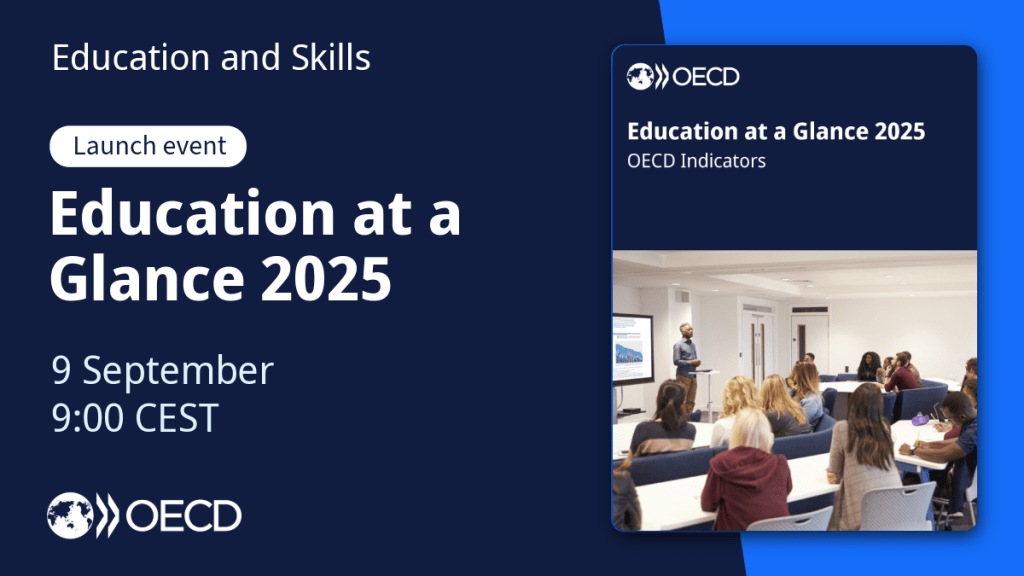
Education at a Glance launch event
9 September 09:00 CEST
Education at a Glance is the definitive guide to the state of education around the world. It gives policymakers the evidence to improve education systems by sharing comprehensive data on attainment, enrolment, finance, labour market outcomes and much more. This year’s edition focuses on university and other forms of tertiary education.
The virtual launch event will begin with opening remarks from OECD Secretary General Mathias Cormann followed by the presentation of key findings by Director of Education Andreas Schleicher and reflections from Giuseppe Valditara, Minister of Education and Merit, Italy.

Is tertiary education meeting today’s job demands?
2 September 13.00-14.00
As the world of work evolves, the promises of higher education is under increasing pressure. Rising costs, shifting labour markets and growing questions about the return on investment are forcing students, institutions and policymakers to reassess the value of a university degree.
Ahead of the 9 September launch of this year’s Education at a Glance, the world’s most comprehensive source of international education data, this webinar explored whether we think higher education is keeping pace with the needs of today’s economies and the expectations of tomorrow’s learners.
Speakers included:
- Simon Roy, Head of Higher Education Policy, Directorate for Education and Skills.
- Rosie Hood, Lead Data Scientist for EMEA in LinkedIn’s Economic Graph Research Institute
- Professor James Robson, Associate Professor of Tertiary Education Systems, Director of the Centre for Skills, Knowledge and Organisational Performance (SKOPE), University of Oxford
Moderated by Duncan Crawford, Senior Content Manager, Directorate for Education and Skills

Ask an Expert: How does including children transform research and policy making?
29 July 16:00 CEST
What happens when children are empowered and become true partners in shaping policies, research and institutions?
Empowering children to meaningfully participate in decision making is not only a rights-based imperative, but it also leads to more inclusive, responsive and effective outcomes for individuals and communities alike. From co-creating school rules and curricula to participating as stakeholders in research, children’s input can challenge assumptions, reshape priorities and inspire systemic change.
In our latest “Ask an Expert” webinar we looked at how child participation has evolved, with examples from OECD countries and beyond. We then discussed the importance of how researchers, policymakers and educators can work not just for children, but alongside them.
Speakers included:
- Ellie Craig, Chairperson of the Scottish Youth Parliament
- Linnea Bodén, Associate Professor, Department of Child and Youth Studies, Stockholm University
- Dympna Devine, Full Professor of Education, Society and Critical Childhood Studies, UCD School of Education
Moderated by Francesca Gottschalk & David Hilton Frankel, OECD

Empowering the workforce: Moving beyond degrees in a skills-first era
24 June 16:00 CEST
What if your next job doesn’t depend on a diploma, but on what you can actually do? As AI, green innovation and demographic shifts transform the labour market, traditional hiring practices should be rethought. Now, with economic uncertainty and slower hiring affecting many sectors, there is growing interest in more targeted and efficient ways to match people with jobs.
The OECD report, Empowering the Workforce in the Context of a Skills-First Approach,, explores how a skills-first approach, where proven ability matters more than formal credentials, is redefining how people get hired, promoted and trained.
Watch the recording of the report launch, in collaboration with LinkedIn, where we unpacked why this shift matters not just for educators, employers or policymakers, but for anyone navigating today’s fast-changing world of work. Find out what this means for your career, your community and the economy at large, as we discussed the key trends, challenges, and real-world solutions with experts across sectors.
Speakers included:
- Andreas Schleicher, Director for Education and Skills, OECD
- Sue Duke, VP, Global Public Policy & Economic Graph and Country Manager for Ireland at LinkedIn
- Soon Joo Gog, Chief Skills Officer, SkillsFuture Singapore
- Atul Satija, Founder of the/Nudge Institute
- Iván Bornacelly, Policy Analyst at the OECD Centre for Skills, OECD
Moderated by Duncan Crawford, Senior Content Manager, OECD Directorate for Education and Skills

The OECD Teaching Compass: Aligning teaching with the future of learning
24 June 13:00-14:30 CEST
What kind of teaching do we need for the future we want? As global expectations for learners rise, so too do the demands placed on our teachers. While many education systems focus on what students should learn to thrive in an uncertain future, they also need to consider how to best support teachers so they, in turn, can help their students grow. That’s where our Teaching Compass comes in. It supplements the OECD Learning Compass, which set out a bold vision of student learning for the future.
The OECD Teaching Compass provides a visionary framework to reimagine teaching as a proactive, purpose-driven and future-ready force for positive change. It’s built on the pillars of teacher agency, competencies and well-being, aligning them with curriculum goals and system transformation.
Watch the recording and join OECD Director for Education and Skills Andreas Schleicher in this extended webinar session, to discover the Teaching Compass and hear from experts and educators about what it means to align teaching with future-ready learning, and how we can support teachers to thrive, so learners can too.
Our Teaching Compass is a public good, freely available for anyone to use in ways that support their goals. Feel free to share it with anyone who might find the framework empowering, inspiring, or helpful in pursuing their aspirations.
Speakers include:
- Andreas Schleicher, Director for Education and Skills, OECD
- Bogdan Cristescu, Director, National Centre for Curriculum and Assessments, Ministry of Education and Research, Romania
- Dr Lisa Stephenson, Associate Professor/Reader, Leeds Beckett University, UK
- Edwin Lim, Lead Teacher, Hwa Chong Institution, Singapore
- Nadia Christy, Li, Senior High School Student & OECD Student Advisory Group Chair (2024)
- Kenji Nakamura, Graduate Student, Doctor Course in Hiroshima University
- Aik Yang Ng, CEO, HoloTracker
Moderated by Miho Taguma, Project Manager/Senior Analyst, OECD

Turning insights into impact: What do early case studies reveal about the power of PISA for Schools?
19 June 13:00 CEST
PISA for Schools is an OECD assessment that evaluates 15-year-old performance on reading, mathematics, and science. It also gathers insights into students’ learning environment, engagement and well-being, offering schools valuable data that help them benchmark performance internationally and improve education outcomes. A central ambition, and ongoing challenge, has been translating these insights into meaningful actions that drives lasting school improvement.
This webinar built on the challenge by bringing together school leaders and educators to talk about how participating schools in the initiative are already using their reports to guide real change. From supporting student well-being to reshaping school practices, we discussed how PISA for Schools empowers educators to address challenges with evidence-based strategies.
Speakers included:
- Károly Pála, Executive Coordinator, Office of the Secretary General of the European Schools, Belgium
- Elena de la Guía, Head of the Psychometrics Department, 2E Estudios & Evaluaciones
- Pedro Flexa Ribeiro, Principal, Colégio Andrews, Brazil
- Tanja Vujicic, Senior Analyst and PISA for School’s Project Manager, OECD
It was moderated by Sara Ratner, OPEN Fellow 2024/2025, University of Oxford, United Kingdom. Contact information can be found on the below slides button.

The teaching profession reimagined: From classroom innovation to system-level transformation
10 June 16.00 CEST
The future of teaching will be shaped by its capacity to innovate, and that innovation often begins in the classroom. As traditional educational models struggle to meet the needs of today’s learners, a growing movement is reimagining teaching as relationship-centered, metacognitive and something that is grounded in real-world problem-solving. But what kind of support do teachers need to take risks and try new approaches? And how can we ensure experimentation leads to better outcomes for both educators and learners?
Drawing on insights from the OECD’s New Professionalism and the Future of Teaching project, this webinar brought together educators and researchers to explore how innovation can take root and thrive in classrooms, across schools and throughout entire education systems. We discussed how new practices, from the school level to the system level, can drive meaningful and lasting transformation and spoke about what it takes to create the conditions where such change can thrive.
Speakers included:
- Linda Darling-Hammond, Professor of Education Emeritus at the Stanford Graduate School of Education and founder of the Stanford Center for Opportunity Policy in Education, and President and CEO of the Learning Policy Institute
- Inge Molenaar, Director of the Dutch National Education Lab AI (NOLAI) and Professor of Education and Artificial Intelligence at the Behavioural Science Institute, Radboud University, Netherlands
- Francisca Elgueta, Chilean History Teacher, Winner of the Global Teacher Prize Chile 2022, and Executive Director at Escuela Global
- Piet van de Velde, Flemish school leader
It was moderated by Lydia Vosberg and Jose Manuel Torres of the New Professionalism and the Future of Teachings project

Trends Spotting: Strategic foresight for tomorrow’s education systems
5 June 13:00 CEST
Education systems of the future are shaped by the global forces of today, like rising geopolitical tensions, rapid technological changes and seismic shifts in the world of work. Added to this are the unexpected shocks that will happen, but we can’t predict. To assist, the OECD report, Trends Shaping Education 2025, continues to help policy makers, educators and other education stakeholders navigate this uncertainty by analysing global trends and their potential implications for education. It combines insights with practical tools for strategic foresight and a structured way of thinking about the future to help create better policy making decisions today.
In this webinar our panel of experts talked about the report and how global transformation is shaping education in their own contexts. We looked at the report’s tools and shared tips on how governments, universities and schools can use foresight to anticipate challenges, grasp opportunities and shape education for the better in our rapidly changing world.
Speakers included:
- Deborah Nusche, Senior Analyst, OECD
- Sophie Howe, Future Governance Adviser at the School of International Futures, first Future Generations Commissioner for Wales (2016-2023)
- Davina Marie, Interdisciplinary Lead, Queens College London
- Thomas Jørgensen, Director for Policy Coordination and Foresight at European University Association
Moderated by Sasha Ramirez-Hughes, Communication Manager, Directorate for Education and Skills, OECD
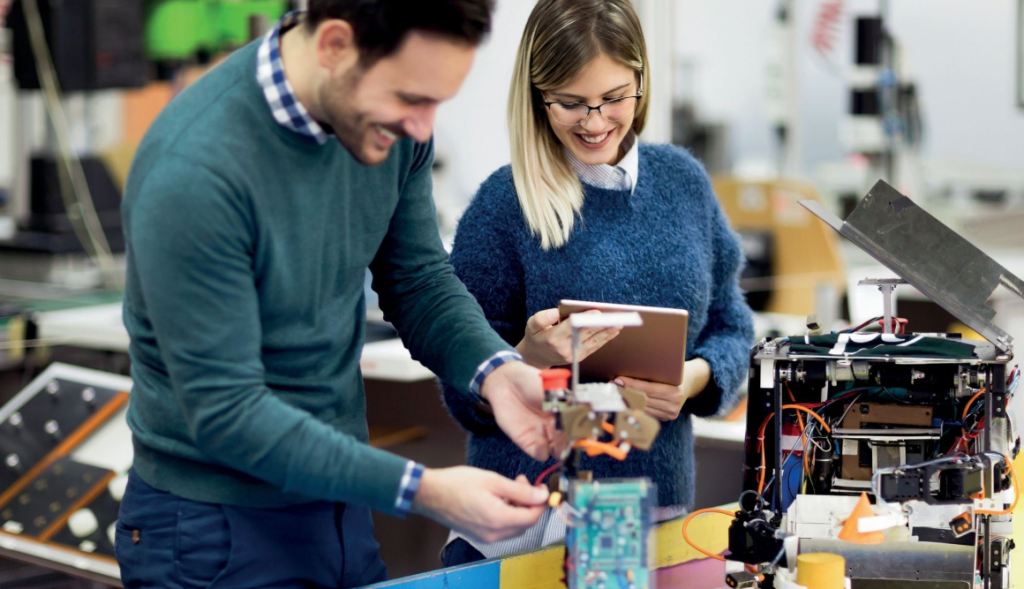
How to design and deliver higher technical education to develop in-demand skills
3 June 13:00 CEST
In a world of AI, machine learning and net-zero technology, high level technical skills are in demand, but there is a huge job skills gap. Specialised vocational and technical courses are a potential solution. Countries are increasingly looking at short-cycle tertiary education programmes to help people develop real-world skills for sectors like health, IT and advanced manufacturing. How can education leaders ensure these schemes are effective and equip students with the skills employers need?
In this webinar, experts analysed the design and delivery of effective higher technical education programmes. Building on insights from the recent OECD report Higher Technical Education in England, United Kingdom: Insights from Selected International Experience, the discussion also focused on how to improve practical post-secondary programmes to open new doors for students and adult learners alike.
Speakers include:
- Stewart Butler, Labour Market Economist, OECD
- Elizabeth Blackwell, Senior Policy Advisor, Department for Education, United Kingdom
- Eva Valcke, Director of Education at KEA, Copenhagen School of Design and Technology
- Mats Kihlman, Head of Department for HVE, School of Engineering, Jönköping University
Moderated by Sasha Ramirez-Hughes, Communication Manager, Directorate for Education and Skills, OECD

Are teenagers prepared for their careers? The world’s biggest ever global survey raises serious concerns
20 May 12:15 CEST
In this webinar, the OECD unveiled new data and an interactive dashboard which shows what jobs young people want and unpack why those job aspirations often fail to recognise the realities of the labour market. This is the largest ever study on the job ambitions of 15-year-olds, speaking to 700,000 students in 80 countries and economies.
Participants put questions to the OECD’s Director of Education and Skills, Andreas Schleicher and an expert panel of guests and examined ways to bridge the aspiration gap, connect education with evolving job markets and expand access to real-world career experiences, particularly for disadvantaged students. The OECD report ‘The State of Global Teenage Career Preparation’ has been produced by the Career Readiness project with support from the Education and Employers Charity and Amazon.
Speakers included:
- Andreas Schleicher, Director for Education and Skills at the OECD
- Anthony Mann, Senior Analyst at OECD’s Education and Skills directorate
- Peter Cheese, Chief Executive of CIPD
- Cath Possamai, Director of Talent Acquisition, Amazon EMEA, India, APJC, LATAM
- Nick Soar, Executive Principal, Harris Federation of Academies
Moderated by Nick Chambers, Chief Executive, Education and Employers
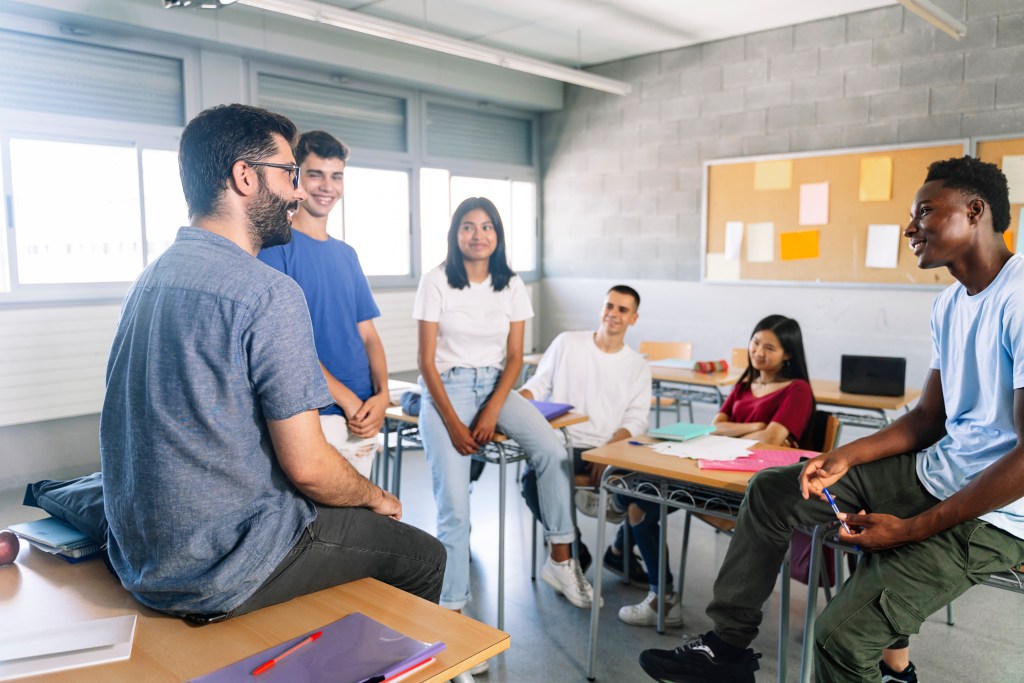
The teaching profession reimagined: Adapting to a changing world
23 April 14:00 CEST
The teaching profession and the environments that support it are evolving. This is forcing education systems to rethink career pathways, strengthen teacher autonomy and find ways to foster a healthy, sustainable work environment. A diverse, flexible profession, that values specialisation, collaboration and continuous learning, can support teachers and attract new generations. But what does this shift mean in practice and how can schools, education systems and teachers shape the transformation?
This webinar looked at the emerging trends in teacher professionalism, drawing on insights from the OECD’s New Professionalism and the Future of Teaching project. Our expert guests discussed how professional environments can evolve to empower teachers, support career diversity and create the conditions for sustained well-being and effectiveness.
Speakers included:
- Carol R. Rinke, Professor of Education and Assistant Provost for Student Success, Marist University, New York
- Evangelia Demerouti, Professor of Organizational Behavior and Human Decision Processes, Eindhoven University of Technology
- Doris Pfingstner, Magister & school principal, middle school in Vienna
- Fran Jordan, Deputy Headteacher, Federation of Blenheim Road Community and Coed Eva Primary Schools

Using AI to Support Student Creativity: What Do We Know So Far?
16 April 12:30-13:30 CEST
As AI tools advance, educators and policymakers are grappling with key questions: can these tools be used to support student’s creative thinking, or do they risk limiting skills and independence?
In the lead-up to World Creativity and Innovation Day, this webinar explored whether AI can help learners apply subject knowledge in innovative ways, or if it encourages dependency and superficial engagement. Beyond the classroom, we also considered the ethical, regulatory, and equity implications of AI in education—who benefits, who is left behind, and how can we ensure these tools enhance rather than undermine human creativity and expertise?
Speakers included:
- Todd Lubart, Professor of Psychology, Université Paris Cité
- Kim van Broekhoven, Assistant Professor, Educational Sciences, Erasmus University Rotterdam
- Anil R. Doshi, Assistant Professor of Strategy and Entrepreneurship, UCL School of Management
Moderated by Stéphan Vincent-Lancrin, Senior Analyst and Deputy Head of Division, OECD Directorate of Education and Skills

Women, girls and AI: Paving the way to a balanced digital future
28 March 13:00-14:00 CET
As AI reshapes the global workforce, how can we ensure it narrows – rather than widens – gender gaps? This OECD webinar brought together leading experts to examine AI’s impact on women’s employment opportunities, the role of education in closing digital divides, and strategies to make AI more inclusive. From recruitment algorithms to workplace monitoring, AI is transforming the labour market and education systems in ways that can either reinforce or dismantle systemic biases. The choices we make now will shape the future of work for millions, making it critical to address these challenges with urgency and foresight.
In this webinar we discussed the structural barriers women face in acquiring digital skills and pursuing AI-related careers, from early education to lifelong learning. We also highlighted some innovative programs and policies that are bridging the gender divide in technology, ensuring that AI is built by and for everyone.
Speakers included:
- Rosie Hood, Lead Data Scientist for EMEA in LinkedIn’s Economic Graph Research Institute
- Anna Jahn, Senior Director of Policy and Inclusion at Mila
- Celine Caira, Economist & Policy Analyst, AI Unit of the OECD Division of Science, Technology and Innovation (STI), OECD
- Stephan Vincent-Lancrin, Senior Analyst and Deputy Head of Division at the OECD Directorate for Education and Skills
Moderated by Marta Encinas-Martin, OECD Education Gender Ambassador and Senior Advisor for the OECD’s Global Relations and Cooperation Directorate

Improving skills outcomes through stronger coordination and stakeholder engagement
18 March 15.30-16.30 CET
As labour market demands rapidly evolve, education and training systems must keep pace. But ensuring they deliver the right skills at the right time requires more than just good intentions—it demands strong governance. Effective coordination across ministries, government levels, and non-governmental stakeholders is essential for shaping policies that truly work. Yet, many countries struggle to break down silos and engage the right voices to drive meaningful reform.
How can governments promote better skills system governance? What can be done to foster better coordination and tap into real-world expertise of stakeholders to design skills policies that make an impact?
In this webinar, the OECD Centre for Skills presented lessons from working with countries on strengthening the governance of their skills systems, with a special focus on better engaging stakeholders in education and skills policy. A panel of experts then discussed best practices and innovative approaches to ensuring that stakeholders close to skills challenges—employers, trade unions, educators, and civil society—have a say in shaping the policies that affect them.
Speakers included:
- Ina Progonati, Sustainability &Social Impact Partnerships and Programs Worldwide Lead, HP
- Liene Voronenko, Expert of Education, Employers’ Confederation of Latvia
- Johan Enfeldt, Research Officer, Department for Social Policy Issues, Swedish Trade Union Confederation
- Marius Busemeyer, Professor of Political Science, University of Konstanz
- Andrew Bell, Deputy Head of the OECD Centre for Skills and Head of OECD Skills Strategy
- Abigail Sageev, Policy Analyst at the OECD Centre for Skills
Moderated by Laura Reznikova, Policy Analyst, OECD Centre for Skills

From classroom to community engagement: Promoting active citizenship among young people
25 February 13:00-14:00 CET
OECD data finds that young people consistently express less trust in government and lower satisfaction with democracy than older age groups across OECD countries. At the same time, young people continue to engage in the political debate and demonstrate leadership in other ways, such as through demonstrations, social movements, boycotting products or signing e-petitions. Youth’s participation in democratic processes remains key to ensure their long-term sustainability.
This webinar explored policies and initiatives that countries are implementing to promote civic literacy and participation among young people, building on the findings of recent OECD analysis on civic education and on youth volunteering and was organised by the OECD Directorate for Education and Skills and the OECD Public Governance Directorate.
Speakers included:
- Kiley Hamilton, Director of Policy and Program Innovation, Canada Service Corps, Department of Employment and Social Development Canada
- Hannah Louise Graham, Manager for Advocacy, Policy and Campaigns, World Organization of the Scout Movement
- Hugo Wester, Director of Education at the Swedish National Agency for Education
- Albert Philip Hendrik Janssens, Board Member at the Organising Bureau of European School Student
- Pietro Gagliardi, Policy Analyst, OECD Public Governance Directorate
- Hannah Borhan, Research Assistant in the Education for Inclusive Societies Project, OECD
Moderated by Sasha Ramirez-Hughes, Communication Manager, Directorate for Education and Skills, OECD

Who sparks the engine for research to fly? The role of knowledge intermediaries in education
13 February 13:00-14:30 CET
Education systems face persistent challenges in connecting research to policy and practice. Limited coordination, gaps in skills and infrastructure, and the complexity of translating evidence into action mean that research often falls short of influencing real-world decisions. At the same time, a broad set of knowledge intermediaries – organisations that facilitate engagement with research among policy makers and practitioners in education – play an increasingly vital role in bridging these gaps.
Who are these intermediaries? What are they doing to connect research, policy, and practice, and how can they improve their impact? In this webinar, we explored the findings from the OECD’s latest report Everybody Cares About Using Education Research Sometimes, which draws on new data from 288 such organisations across 34 countries. Check out the recording to hear from experts, discover real-world examples and discuss opportunities to strengthen coordination and system-level strategies for better use of education research.
Speakers included:
- Alan C. K. Cheung, Professor and Chair of the Department of Educational Administration and Policy, The Chinese University of Hong Kong
- Annika Wilmers, Senior Researcher at Leibniz Institute for Research and Information in Education
- Samuel Kembou, Global Lead for Learning and Evidence, Jacobs Foundation
- Isabelle Janssens, Operational Director, Stichting Leerpunt
- Nóra Révai, Project lead, OECD’s Strengthening the Impact of Education Research project
- José Manuel Torres, Policy Analyst, Strengthening the Impact of Education Research and the Unlocking the potential of diverse teaching profiles projects, OECD
Moderated by Duncan Crawford, Senior Content Manager, OECD Directorate for Education and Skills.

How to create inclusive classrooms for children with special education needs
30 January 13:00-14:00 CET
Creating inclusive classrooms is essential for supporting all learners, including those with special education needs such as dyslexia, autism and ADHD. These environments not only benefit students with special education needs, but also enrich the learning experience for all children, encouraging empathy, understanding and collaboration. This helps ensure that every student can achieve their full potential and promotes academic and social success.
How do you design a classroom that supports diverse learning needs? In this webinar, we explored how inclusive policies, teaching strategies and support mechanisms can create supportive classrooms where all students can thrive.
Speakers included:
- Kate Griggs, Founder and CEO of Made in Dyslexia
- Sam Pittis, Broadcaster and journalist & Co-host of the award nominated podcast ‘You’re Wrong about ADHD
- Cecilia Mezzanotte, Policy Analyst at OECD’s Directorate for Education and Skills, for the Education for Inclusive Societies Project
Moderated by Duncan Crawford, Senior Content Manager, OECD Directorate for Education and Skills.

Global Launch: Starting Strong VIII – Reducing Inequalities by Investing in Early Childhood Education and Care
29 January 10:00-11:00 CET
The early years set the foundations for children’s development and learning in life. Early inequalities can divert children from positive trajectories, but Early Childhood Education and Care (ECEC) policies can level opportunities from the start, with lasting economic and social benefits. Reducing gaps in participation and strengthening the quality and inclusivity of ECEC are essential steps to support young children and families and reduce inequalities in societies.
Key elements of successful ECEC policies are the core subject of the OECD’s Starting Strong policy reviews. The eighth volume in the series, Reducing Inequalities by Investing in Early Childhood Education and Care explores how improved governance, adequate funding, and evidence-based curriculum and training policies can support access, quality and inclusion in ECEC with long-term positive effects for children, in alignment with a broader landscape of policies aiming to mitigate inequalities in early childhood.
Watch the launch of Starting Strong VIII below, where Andreas Schleicher, Director for Education and Skills at the OECD, presented and discussed the report’s main messages along with international experts.
Speakers include:
- Andreas Schleicher, Director for Education and Skills at the OECD
- Sharon Goldfeld, Director, Centre for Community Child Health, Royal Children’s Hospital, and Director Population Health, Murdoch Children’s Research Institute, Melbourne, Australia
- Eva Lloyd, Emeritus Professor of Early Childhood, University of East London, United Kingdom
- Michel Vandenbroeck, Emeritus Professor of Social Work and Social Pedagogy, Ghent University, Belgium
Moderated by Duncan Crawford, Senior Content Manager, OECD Directorate for Education and Skills.

Launch of Trends Shaping Education 2025
23 January 09:45-10:45 CET
How will rising inequality and polarisation shape education? How could advances in artificial intelligence and virtual reality transform teaching and learning? How can the education sector prepare for and mitigate climate emergencies or mental health crises?
The 2025 edition of the Trends Shaping Education report explores the social, technological, economic, environmental and political forces impacting education systems worldwide. Introducing a range of futures thinking tools, it aims to inspire reflection on how these global trends might transform education and how education can shape a better future.
The report is designed to give policy makers, researchers, educational leaders, and teachers a robust, non-specialist source of international comparative trends shaping education, whether in early childhood education and care, schools, universities or programmes for older adults. It will also be of interest to students, parents and anyone curious about how education can address today’s challenges and prepare for the future.
Speakers at the launch included:
- Andreas Schleicher, OECD Director for Education and Skills
- Anita Lehikonen, Permanent Secretary Education and Culture, Finland
- Chern Wei Sng, Deputy Director General, Ministry of Education, Singapore
- Susan Acland-Hood, Permanent Secretary Education, United Kingdom
Moderated by Anthony Mackay, Co-Chair of the US National Center on Education and the Economy

Insights from Skills Strategies in the European Union: Lessons Learnt for Developing and Implementing Effective Skills Policies
21 January 15:00 CET
In today’s fast-changing, interconnected world, skills are the key to resilience, adaptability and success—for individuals and countries alike. How can we ensure that people have the skills they need to thrive?
Click below to watch the official launch event of our latest report, Insights from Skills Strategies in the European Union: Lessons Learnt for Developing and Implementing Effective Skills Policies. Supported by the European Commission, this report distills a decade of insights from 26 EU countries, offering 9 key lessons for designing and implementing effective skills strategies. These lessons will help policymakers and stakeholders build resilient and inclusive skills systems, foster collaboration across sectors and tackle challenges and seize opportunities with strategic action.

Empowered Citizens, Informed Consumers and Skilled Workers: Designing Education and Skills Policies for a Sustainable Future
17 January 13:00-14:00 CET
The OECD is scaling up and mainstreaming its support to countries in navigating the climate challenge. The OECD’s work on Education Policies for a Sustainable Future is part of that effort. Our latest report explores how education and training policies can foster individual and collective agency, influence socio-behavioural change, and build skills that empower individuals and communities to shape and benefit from the green transition. It argues for a holistic, lifecycle approach to integrating sustainability in education, spanning from schooling through to vocational education and training, higher education, and adult learning. The insights it generates will inspire deeper reflection and coordinated action towards a future where people and planet can thrive in harmony.
This webinar, at the launch of Empowered Citizens, Informed Consumers and Skilled Workers – Designing Education and Skills Policies for a Sustainable Future, discussed with a panel of experts the reports key messages and findings.
Speakers included:
- Owen Gaffney, Chief impact officer, Nobel Prize Outreach; Co-lead Earth4All
- Éidín Gallagher, Senior Leader for ‘Climate Action and Sustainable Development’ with Oide, the Department of Education Support Service for Teachers in Ireland
- Deborah Nusche, Senior Analyst, Education Policies for a Sustainable Future, OECD
Moderated by Sasha Ramirez-Hughes, Communication Manager, Directorate for Education and Skills, OECD