

The state of adult skills: Key takeaways from the OECD Survey of Adult Skills
10 December 15:00 CET
In today’s information-rich societies, having advanced literacy, numeracy and problem solving skills is more important than ever. But how can governments ensure adults have relevant skills?
The OECD’s new Survey of Adult Skills (PIAAC) gives a once-in-a-decade assessment of how well adults can read and understand text, work with numbers and solve complex problems. By providing a comprehensive snapshot of some of a population’s fundamental capabilities, it allows policymakers to identify where people excel and pinpoint gaps that need to be addressed.
In this webinar, we’re talking through the results, analysis and implications for policymakers and education leaders. Register and join the discussion with Andreas Schleicher, Director of Education and Skills and moderator Duncan Crawford, Senior Editor at the OECD.

Launch of the findings from the 2023 Survey of Adult Skills (PIAAC)
10 December 11:00-12:30 CET
The 2023 Survey of Adult Skills (PIAAC) provides a comprehensive overview of adults’ literacy, numeracy, and adaptive problem-solving skills – skills that are fundamental for personal, economic, and societal development. These skills provide the foundation for access to employment, higher wages and continuous learning, while enabling individuals to navigate the complexities of their personal and civic lives.
A total of 31 countries and economies, mostly OECD members, participated in the 2023 survey. With 27 of these countries also participating in the previous cycle of the Survey of Adult Skills, the data provides valuable insights into how literacy and numeracy skills have evolved over the past decade.
You can check out the recording featuring presentations from Andreas Schleicher, Director for Education and Skills & Stefano Scarpetta, Director of the Employment, Labour and Social Affairs Directorate below.

Strategies and Practices to Advance Student Social and Emotional Skills: Global Insights, Current Challenges, and Pathways Forward
4 December 2024 13:00 CET
What can educators and policymakers do to foster the long-term development of social and emotional skills? The OECD Social and Emotional Skills Survey highlights major challenges to improving skills in classrooms around the world. The findings also emphasise the importance of equipping teachers with up-to-date knowledge about the far-reaching benefits of social and emotional skills and offering them the necessary support to integrate these skills into their teaching practices.
It comes as OECD policy analysis shows skills such as collaboration, empathy and responsibility can be effectively taught in educational settings. Recent advances also show these skills can be measured in a more direct and comparable way through innovative techniques, including the use of behavioural tasks and games.
What guidance and tools do policymakers and practitioners need to drive real progress? In this webinar, our panel of experts discussed the latest findings, strategies and practices to advance social and emotional development.
Speakers included:
- Tomasz Gajderowicz, Deputy Director for Research of the Institute for Educational Research in Warsaw, Poland
- Maria E. Hyler, Director of Washington, DC Office and Senior Researcher, Learning Policy Institute; Director, EdPrepLab
- Raymond Bou Nader, Associate Professor at Saint Joseph University of Beirut and Advisor to the President of the Center for Educational Research and Development (CERD), Ministry of Education, Lebanon.
- Daniel Catarino da Silva, Expert for the Rethinking Assessment of Social and Emotional Skills Project, OECD.
- Hannah Ulferts, Analyst at the Directorate for Education and Skills, OECD
Moderated by Duncan Crawford, Senior Content Manager, OECD Directorate for Education and Skills.
How does technology influence learning outcomes?
2 December, 15:30 – 16:20 CET
As technology becomes ever more embedded in our classrooms, are students genuinely benefiting from its integration or are we facing unintended setbacks? Many educators, parents, and policymakers wonder whether the frequent use of technology improves learning outcomes. Does digital engagement impact students’ focus, confidence and problem-solving skills or are we creating new gaps in skills and understanding? How do students’ and teachers’ attitudes towards technology influence the relationship?
In this webinar, we discussed the key findings of the Learning in the Digital World Pilot Study conducted in Germany by the OECD in collaboration with the Leibniz Institute for Research and Information in Education and supported by the Vodafone Foundation. The study, which involved 730 students across 46 lower-secondary schools, measures students’ computational thinking skills, self-regulated learning in digital environments, and students’ attitudes towards digital learning tools.
Speakers included:
- Dr Uta Hauck-Thum, Professor of Primary School Pedagogy and Didactics at Ludwig-Maximilians-University Munich
- Matthias Graf von Kielmansegg, Managing Director Vodafone Foundation Germany
- Julia Mosbach, Teacher, Peter-Wust-Gymnasium (Grammar School) in Merzig, Germany
- Andreas Schleicher, OECD Director for Education and Skills
Moderated by Mario Piacentini, Senior Analyst, OECD Directorate for Education and Skills

Launch of the Education Policy Outlook 2024: Reshaping teaching into a thriving profession from ABCs to AI
25 November 09:00 CET
How can education systems attract and empower teachers for successful change? Supporting high-quality teaching requires that education systems address current challenges while anticipating future transformations. This calls for a rethinking of how to advance the teaching profession, from exploring new approaches to workforce management and updating foundational pedagogies to integrating AI and other innovations.
During the launch of the Education Policy Outlook 2024: Reshaping Teaching into a Thriving Profession from ABCs to AI we discussed key global trends affecting the teaching profession and learnt about emerging policy priorities for governments from the OECD perspective. The report offers a policy roadmap to help education systems balance the supply and demand for quality teaching in these evolving times, drawing on data from 33 education systems and additional evidence.

Are foundation skills the building blocks for success in the AI era?
22 November 2024 13:00 CET
Artificial intelligence is reshaping jobs and automating more and more complex tasks. But are foundational skills like literacy, numeracy, and problem solving losing their relevance, or are they more critical than ever? How can they empower individuals to quickly adopt emerging technologies, adapt to new job demands, and innovate in ways that keep them ahead in an AI-driven world?
In the lead up to the next round of results for the OECD Survey of Adult Skills in December, we discussed how these essential skills will continue to remain vital in navigating the rapidly evolving AI landscape and in future proofing careers.
Speakers included:
- Noel Baldwin, Interim executive director, Future Skills Centre
- Dave Tout, Numeracy and mathematics education researcher and facilitator
- Stijn Broecke, Senior Economist, OECD
Moderated by Sasha Ramirez-Hughes, Communication Manager, Directorate for Education and Skills, OECD
Ask an expert: How can we empower children to help shape the future of our societies?
19 November 16:00 CET
Child empowerment remains high on education policy agendas around the world. The growing view is that children are autonomous agents of change who play important roles in shaping current and future democracies. A large body of evidence suggests that education systems can help empower children to act on topics that they feel passionate about and that affect them, as outlined in the 2024 OECD report, “What does child empowerment mean today?”.
In this second Ask an Expert webinar on child empowerment, we continued to explore what child empowerment can look like from different perspectives, building on the first webinar earlier this year. We discussed the challenges and opportunities in creating child-centered policies and practices that acknowledge the rights, experiences and opinions of children in education systems worldwide.
Speakers included:
- Dr. Margreet de Looze, Assistant Professor of Social and Behavioural Sciences, Utrecht University
- Nadia Christy Li, Senior High School Student and FG3 Student Advisory Group (2024) Leader
- Anne Magdalena Solbu Kleiven, Director of division for Statistics, Research and Equality, The Norwegian Directorate for Children, Youth and Family Affairs
Moderated by Jordan Hill, Analyst in the Centre for Educational Research and Innovation, OECD

What can schools, higher education and the labour market do right now to tackle climate change?
13 November 2024 13:00 CET
The fight against climate change requires all parts of society to work together—this includes schools, universities, businesses and other organisations. But how can we ensure these sectors are aligned and collaborate effectively? How do we engage more employers to actively support the development of the green skills? And what are the risks if they don’t?
Our discussion explored how education, skills development and the labour market can join forces and address climate inaction to drive immediate, meaningful change.
Speakers included:
- Matthew Pye, Philosophy Teacher, Author, and Founder of the Climate Academy
- Giorgia Licciardello, Student at the European School of Brussels
- Susan Gill, Manager at Climate Strategy & Skills, SOLAS
- François Staring, Policy Analyst (Higher Education), OECD
Moderated by Sasha Ramirez-Hughes, Communication Manager, Directorate for Education and Skills, OECD
Understanding international differences in maths: Does a country’s ‘culture of mathematics’ really shape its success?
5 November 13:00 CET
In this webinar which coincided with the launch of the report “Mathematics for Life and Work: A Comparative Perspective on Mathematics to Inform Upper Secondary Reform in England“, we looked at the factors that influence math participation and achievement in upper secondary education across various countries, challenging the idea of a fixed ‘culture of mathematics’. We explored the impact of educational policies, societal attitudes, and economic factors, and examine whether cultural perceptions truly shape how students engage with math’s— or whether deeper systemic issues are at play.
Check out the recording as we looked at the realities behind global performance and discussed potential reforms that could help all countries enhance student engagement and achievement in mathematics.
Speakers included:
- Hjalte Meilvang, Senior Advisor, National Agency for Education and Quality, Ministry of Children and Education, Denmark
- Linda Ramsbottom, Senior Post Primary Inspector, Department of Education, Ireland
- Eduardo Magalhães, Analyst, Transitions in Upper Secondary Education, Directorate for Education and Skills, OECD
Moderated by Duncan Crawford, Senior Content Manager, OECD Directorate for Education and Skills.

Defending democracy: The vital role of skills in protecting the future of democratic institutions.
30 October 2024 13:00 CET
As modern societies face increasingly complex policy challenges, democratic institutions are under stress. People’s trust in the democratic process and governments is declining. Polarisation and populism are on the rise, often fuelled by fake news and disinformation campaigns disseminated through new digital media and social networks. To what extent can skills be a part of the solution?
This webinar reflected on the skills and attitudes people need to navigate modern societies and become active and positive contributors to public debates. Critical thinking and analytical skills, for example, can enable individuals to evaluate political information, policies, and candidates effectively. Check out our curtain raiser webinar recording below in the lead up to the next round of results for the OECD Survey of Adult Skills in December 2024.
Speakers included:
- Katju Holkeri, Acting Director General, Public Governance Department in the Ministry of Finance, Finland
- Irwin Kirsch, former Tyler Chair for Large Scale Assessment, Emeritus.
- Caillum Hedderman, Board Member of the European Youth Forum
Moderated by Duncan Crawford, Senior Content Manager, OECD Directorate for Education and Skills.

Global Launch: ‘Nurturing Social and Emotional Learning Across the Globe’
October 2024, 13:00 – 15:30 CET
The Survey on Social and Emotional Skills (SSES) assesses the conditions and practices that foster the development of social and emotional skills for 10- and 15-year-old students. The second round of SSES was conducted in 2023, with the participation of sixteen countries and subnational entities: Bulgaria, Bogotá (Colombia), Chile, Mexico, Peru, Spain, Ukraine, Delhi (India), Dubai (UAE), Emilia-Romagna (Italy), Gunma (Japan), Helsinki (Finland), Jinan (People’s Republic of China), Kudus (Indonesia), Sobral (Brazil) and Turin (Italy).
The OECD, in collaboration with the Chilean National Agency for Education Quality, invited participants to the virtual launch of the report “Nurturing Social and Emotional Skills across the Globe” where Andreas Schleicher, Director for Education and Skills at the OECD discussed the report’s findings along with national and international experts, policy makers and practitioners.
User-centred AI education tools and resources: co-creation models
16 October 2024 13:00-14:00 CET
Many digital tools and resources in the education sector were initially developed for other sectors. As a result, practitioners sometimes struggle to embed them in their professional practice and policy makers find the investment in digital education relatively inefficient. This webinar will explore the need for new institutional models and processes to develop digital tools and resources for education, notably tools that meet a real need in the education community and that can be more easily embedded in educational practices.
The Opportunities, guidelines and guardrails for effective and equitable use of AI in education published by the OECD Secretariat and Education International, the global federation of teacher unions, highlight “co-creation” involving teachers and schools as an important practice (guideline #5). In the OECD Digital Education Outlook 2023, Inge Molenaar highlights different “triple (or quadruple) helix” models involving governments, academics, for-profit developers and school practitioners for this multistakeholder cooperation and co-creation to happen.
Watch the recording to check out the conversation, moderated by the OECD’s Stéphan Vincent-Lancrin, with speakers including: Inge Molenaar, Director of National Education Lab AI (NOLAI) and Professor at Radbout University, Netherlands, Axel Jean, Head of Digital Innovation and Applied Research, Ministry of Education, France and Donatella Solda, Director, Future Education Modena, Italy. The webinar will showcase three different models for co-creation, led by a university, the government and a non-governmental organisation.
A Skills-first future: What is it and how do we get there?
9 October 2024 09:00-10:00 CEST
Recent shifts in skill demands reveal gaps and mismatches in global labour markets. Employers face challenges in finding candidates with relevant skills, while individuals struggle to identify and signal their skills effectively. A skills-first approach – one that promotes hiring based on skills rather than conventional educational or professional indicators – could be the answer, simultaneously addressing inequalities like hiring bias and in access to lifelong learning opportunities.
Watch the recording and join the OECD Centre for Skills for a discussion about skills-first and their ongoing project “Beyond degrees: Empowering the workforces in the context of skills-first” in collaboration with LinkedIn. Please note that a LinkedIn account is required to watch this recording.
The state of global education: Key takeaways from Education at a Glance 2024
10 September 2024 15:00-16:00 CET
Education at a Glance is the definitive guide to the state of education around the world. It gives policymakers the evidence to improve education systems by sharing comprehensive data on attainment, enrolment, finance, labour market outcomes and much more. This year’s edition focused on equity in education.
In our post-launch webinar we delved deeper into EAG 2024 with Andreas Schleicher, OECD Director of Education and Skills, who presented some of the global results and analysis. Following his presentation, we heard from distinguished speakers, Natalia Miteva, Deputy Minister of Education and Science of Bulgaria, and João Costa, former Minister of Education of Portugal and current Chairperson of the OECD Education Policy Committee, who offered their unique perspectives. The session will concluded with a live Q&A where we also heard from Lucie Cerna, Senior Analyst at the Equity, Inclusion & Transitions project and received her thoughts on the importance of this year’s EAG Spotlight focus, equity.

Launch of Education at a Glance 2024
10 September 2024 11:00-12:00 CET
Education at a Glance 2024 (EAG) is the definitive guide to the state of education around the world. It analyses all levels of education and provides data on topics such as attainment, enrolment, finance and the organisation of education systems across OECD countries and a number of accession and partner countries. This year’s edition of EAG focuses on equity in education.
Click below to watch the recording and see Mathias Cormann, Secretary-General of the OECD and Andreas Schleicher, Director for Education and Skills present at the event and discover the latest data and analysis on the state of education.
Pack your bags, it’s back to school! What’s on the horizon for a new school year?
30 August 2024 14:00-15:00 CET
When teachers, students, and parents around the world prepare for their annual return to school they often face many new challenges. In this webinar we explored those challenges, as well as the opportunities which might arise, when we asked: What do we encounter in a new academic term?
We shared advice on how students and teachers could prepare for a new school term and spoke about some of the work current OECD projects are doing related to Career Readiness and the Future of Education and Skills for which our guest student panelist Nadia Christy Li contributes to via her role as a student representative.
Speakers included:
- Mike Thiruman, General Secretary, Singapore Teachers’ Union
- Nadia Christy Li, Senior High School Student, Indonesia
- Dr Anthony Mann, Senior Policy Analyst, Directorate for Education and Skills, OECD
Moderated by Duncan Crawford, Senior Content Manager, OECD Directorate for Education and Skills.
How teachers can use AI effectively
1 August 14:00-15:00 CET
Supporters of AI argue it has the potential to supercharge education but do teachers know how to use it effectively? Today, few education systems provide guidelines on if and how teachers should use AI in their classrooms. This has contributed to a gap between teachers’ interest in using AI and the support and training they receive to effectively use AI tools and techniques.
With predictions of an AI revolution across the education landscape, this webinar explores ways teachers can use AI to improve learning outcomes.
Speakers included:
- Punya Mishra, Director of Innovative Learning Futures at the Learning Engineering Institute and Professor at the Mary Lou Fulton Teachers College at Arizona State University
- Madhumalti Sharma, PMP, Founder & President of Workshop4Me
- Samo Varsik, Policy Analyst, Education for Inclusive Societies project, OECD
Moderated by Duncan Crawford, Senior Content Manager, OECD Directorate for Education and Skills.

Battling AI bias in the classroom
25 July 16:00-17:00 CET
Artificial intelligence is being heralded by many for its transformative potential in education, offering personalised learning experiences and more efficient school administration. But as AI use becomes more widespread, so do concerns about bias.
Bias in AI algorithms can perpetuate inequalities, affecting student outcomes and reinforcing societal prejudices. Addressing this AI bias requires a nuanced approach, including ethical guidelines, diverse datasets and rigorous testing. In this webinar, we will discuss some of the ways that education systems can safeguard against the unintended consequences of AI and promote equitable educational practices.
Speakers include:
- Tiera Tanksley, Post Doctoral Fellow in Youth, Technology and Public Policy, UCLA
- Jeremy Roschelle, Executive Director of Learning Sciences Research at Digital Promise
- Eleanor Drage, Senior Research Fellow at the University of Cambridge Leverhulme Centre for the Future of Intelligence
- Stéphan Vincent-Lancrin, Senior Analyst and Deputy Head of Division at the OECD Directorate for Education and Skills
Moderated by Sasha Ramirez-Hughes, Communication Manager, Directorate for Education and Skills, OECD
Building Green Futures: How can students understand and progress towards green careers?
17 July 11:00 CET
The OECD’s recent working paper on green guidance was the starting point for this conversation. The webinar was an opportunity for the OECD Career Guidance project to speak to leading experts and practitioners on how education systems can better equip young people for green careers, and to engage in discussions that could help shape the future of career guidance and education.
Speakers included:
- Young Chang, Directorate for Education and Skills, OECD
- Dr Peter Plant, Aarhus University, Denmark
- Markus Gruber, Department of Environment and Energy Management, Province of Lower Austria
- David Blackmore, Sustainable Futures, WWF UK
Moderated by Dr Anthony Mann, Senior Policy Analyst, Directorate for Education and Skills, OECD
Innovations in measuring social and emotional skills and what AI will bring next
5 July 14:00-15:00 CET
How can we better assess social and emotional skills in students? What role can AI play in this? In this OECD webinar we’ll explore innovative methods to enrich the quality of assessment of social and emotional skills. From behavioural tasks and digital games to virtual reality and biodata, we looked at the potential and pitfalls of each approach.
We also examined vital concerns about AI social biases, data privacy, and ethical considerations. Click on the recording below to discover innovation in assessment and the role of AI in measuring students social and emotional development.
Speakers included:
- Rose Luckin, Emeritus Professor at UCL and Founder and CEO of Educate Ventures Research
- Clemens Lechner, Chief Product Officer at Jam Technology
- Ellen Morgan, Principal Advisor at Templeton World Charity Foundation
Moderated by Adriano Linzarini and Daniel Catarino da Silva, OECD Rethinking Assessment of Social and Emotional Skills project.
You can check out the projects latest working paper here and their interactive online data table can be found here

Will AI in education help students live fulfilling lives?
28 June 11:00-12:00 CET
Artificial intelligence (AI) is often celebrated as a pivotal force in transforming education, but the critical question remains: Will it genuinely support students in achieving a comprehensive sense of fulfillment in their lives? While proponents of AI in education highlight its potential to personalise learning and enhance life quality by promoting happiness, meaning, and purpose, skeptics raise concerns about its overuse potentially stunting cognitive development.
This webinar explored the fundamental issues surrounding the current objectives of education and its alignment with the concept of human flourishing in the age of AI. We discussed how educational paradigms can evolve to better support all aspects of human flourishing and critically examine whether AI can enhance or hinder this process.
Speakers included:
- Andreas Schleicher, OECD Director for Education and Skills
- Anita Lehikoinen, Permanent Secretary of Ministry of Education, Finland
- Chern Wei Sng, Deputy Director-General, Ministry of Education, Singapore (Video)
- Melanie Stewart, Associate Deputy Minister, Ministry of Education and Child Care, British Columbia (Video)
Moderated by Michael Stevenson, Senior Consultant and founder of the High Performing Systems for Tomorrow initiative.
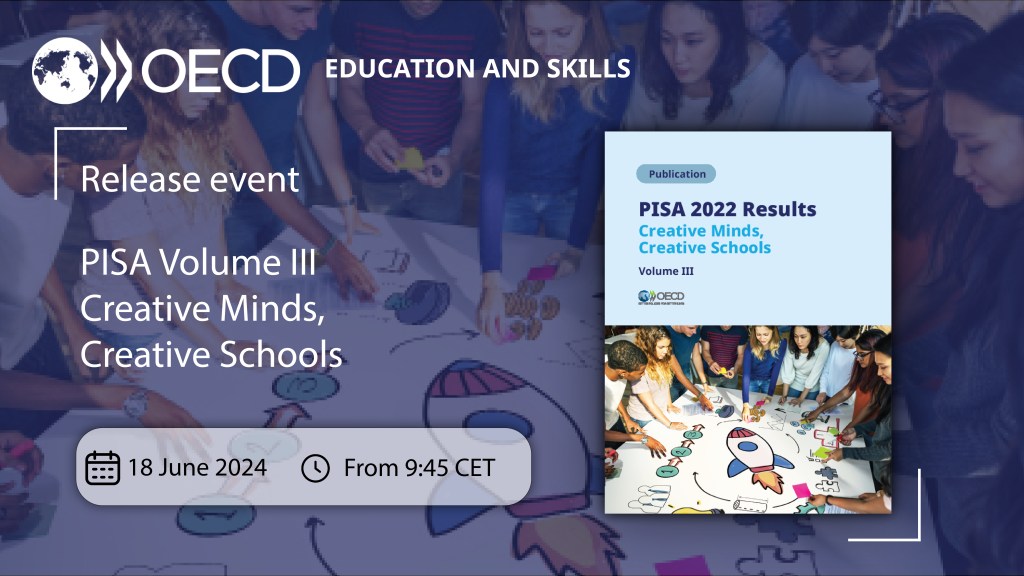
Launch of PISA 2022 Results (Volume III): Creative Minds, Creative Schools
18 June from 09:45-10:30 CET
For the first time, the Programme on International Student Assessment (PISA) has measured the creative thinking skills of 15-year-old students, assessing their ability to engage productively in the generation, evaluation and improvement of ideas. As we navigate the complex environmental, social and economic changes of the 21st century, it is crucial for students to be innovative, enterprising and to use critical and creative thinking purposefully.
To watch the launch of PISA 2022 Results (Volume III): Creative Minds, Creative Schools, please click on the links below.
Speakers include:
- Mathias Cormann, OECD Secretary-General
- Andreas Schleicher, OECD Director for Education and Skills
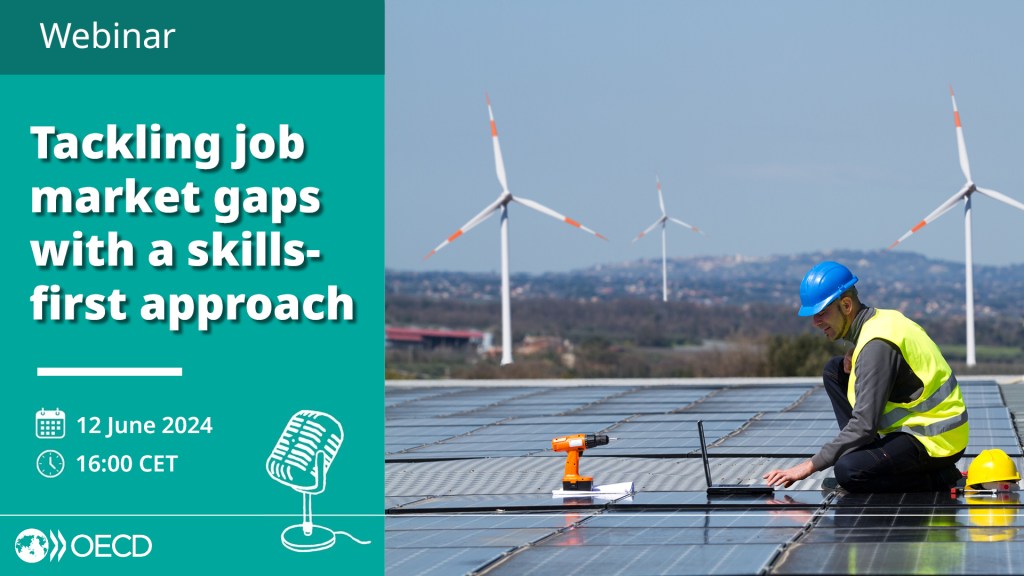
Tackling job market gaps with a skills-first approach
12 June 16:00 CET
In today’s ever-changing job market, there’s a clear demand for skills that fill the employment gap in sectors, particularly those driving green and digital transformations. However, throughout OECD countries, employers are grappling with finding the right talent. Traditional methods of hiring, such as relying solely on academic qualifications or job titles, often fail to capture the true potential of candidates and perpetuate inequalities. What needs to change? A skills-first approach, which focuses on hiring based on actual skills, could be the answer.
In this webinar, the OECDs Skills-first approach project will present some of the preliminary findings and then a panel of experts will discuss further the potential of prioritising skills to promote inclusion in the workforce, especially in essential but to hard-to-fill jobs. Register now to join this important discussion.
Speakers include:
- Iván Bornacelly, Policy Analyst at the OECD Centre for Skills, OECD
- Sharat Raghavan, Research Director, LinkedIn
- Mariana Batista, Education and Skills advisor, WindEurope
- Daniel McCabe, WorldSkills Champion, UK
- Jose Betancur, Director of NODO, Colombia
- Papia Debroy, Senior VP of Research and Insight, Opportunity@Work
Moderated by Duncan Crawford, Senior Content Manager, OECD Directorate for Education and Skills.

Ask an expert: How can education support child empowerment?
31 May 15:00 CET
Child empowerment is high on education policy agendas around the world. The growing view is that children are autonomous agents of change who play important roles in shaping current and future democracies. A large body of evidence suggests that education systems can help empower children to act on topics that they feel passionate about and that affect them as outlined in our recent report, “What does child empowerment mean today?”.
In our latest Ask an Expert webinar, we discovered the student and teacher perspective on how education policy and practice can support child empowerment, and what empowerment can look like from different perspectives. We also delved into what some of the challenges and opportunities are in developing and implementing child-centered policies and practices that acknowledge the rights, experiences and opinions of children themselves in education systems worldwide.
Speakers included:
- Caitlin Faye Maniti, 2022/23 Uachtarán (President) of the Irish Second Level Students’ Union, Ireland
- María Francisca Elgueta, History teacher and winner of the Global Teacher Prize Chile 2022, Chile
- Shari Irfan, 2023/24 Uachtarán (President) of the Irish Second Level Students’ Union, Ireland
- Jordan Hill & Francesca Gottschalk – Analysts in the OECD’s Centre for Educational Research and Innovation, France
Digital devices in schools: Detrimental distraction or secret to success?
27 May 12:00-13:00 CET
Today, the digital landscape plays a crucial role in children’s lives, offering opportunities for education, socialising and entertainment. However, it also poses risks such as cyberbullying, exposure to inappropriate content and breaches of privacy. There are also concerns that excessive screen time can impact children’s social and emotional development, leading to debates about the quality of their interactions. Recent findings from the PISA survey further highlight a negative correlation between leisurely digital device use at school and academic performance.
This webinar brought together policymakers and experts to discuss with Andreas Schleicher, Director for Education and Skills, the role of digital devices in the classroom and the implication of school bans.
Speakers included:
- Andreas Schleicher, Director for Education and Skills, OECD
- Lotta Edholm, Minister for Schools, Sweden
- Vinod Rao, Secretary (Primary & Secondary Education) State of Gujarat, India
Moderated by Duncan Crawford, Senior Content Manager, OECD Directorate for Education and Skills.

Insights from PISA 2022: How prepared are teenagers in England for their future career?
16 May 15:00-16:00 CET
As young people stay in education longer and have more decisions to make about education and training, it has never been more important that they have access to effective and equitable career guidance. This webinar explored how well young people in England are being prepared for their transition into work through a deep analysis of the latest data from the OECD Programme for International Student Assessment. Through PISA, we know the career and educational ambitions of students aged 15, how they engage in career development activities and where they see barriers and enablers as they plan for their futures in work.
Drawing on insights from longitudinal data in multiple countries, including the UK, the webinar highlighted the strengths and challenges of career development in England. With guests from the UK Department for Education and The Careers and Enterprise Company which leads guidance provision in England, the webinar asked how effective, efficient and equitable career development is in England compared to other OECD countries?
Speakers include:
- Lucie Heseltine, Senior Manager, Careers and Enterprise Company (UK)
- Alex Iles, Head of Careers Strategy and Infrastructure, Department for Education (UK)
- Jonathan Diaz, Analyst, OECD
- Anthony Mann, Senior Policy Analyst, OECD

What does child empowerment mean today? Implications for education and well-being.
15 May 14:00-15:00 CET
Child empowerment enables children to act on issues that are important and relevant to them, it develops their confidence and leadership skills, and gives students the belief to play a greater role in school life and pursue their ambitions both now and in the future. But should students be involved in school decisions about wellbeing, curriculum and spending?
The OECD’s latest publication, ‘What Does Child Empowerment Mean Today?‘ dives into these and other issues.
During this launch webinar, OECD Secretary General Mathias Cormann and OECD Director for Education and Skills Andreas Schleicher presented insights from the report, backed by OECD data and contributions from diverse stakeholders. Watch the recording to discover how children in OECD countries are actively participating in decisions that impact their lives and learn about the urgent policy concerns facing education systems in the 21st century.
Speakers include:
- Mathias Cormann, OECD Secretary-General
- Andreas Schleicher, OECD Director for Education and Skills

No Child Left Behind: Tackling the School Absenteeism Crisis
30 April 14:00-15:00 CET
COVID pandemic-induced school closures hindered learning for young people around the world. Yet even today, many students across the OECD have failed to return to the classroom. Two-thirds of schools in the US are facing chronic absenteeism. In England, absences are 50% higher than before the pandemic, with more than one in five secondary pupils considered “persistently absent”, missing 10% or more of their hours of schooling. Even in Norway, which in the pre-pandemic era had successfully cut absenteeism by a quarter, four out of ten school principals are now very concerned about absenteeism in their school.
School absence can have significant individual and societal consequences, spanning academic, economic social, and emotional domains. Addressing absenteeism necessitates a comprehensive approach, including identifying causes, providing support, and fostering a positive school culture that prioritises attendance and engagement.
In this webinar, we’ll talked to experts working to tackle the absenteeism crisis in communities. We looked at what we know and what knowledge gaps remain and explore effective policies and practices for a meaningful intervention to tackle the soaring number of children missing school and losing out on their education.
Speakers included:
- Michael Gary Jr., Chief of Staff, Concentric Educational Solutions, United States
- Bjørn Lescher Nuland, Divisional director for competence development, Directorate of Education, Norway
- Áine O’Keeffe, Director, Tusla Education Support Service, Ireland
- Andreas Schleicher, Director for Education and Skills, OECD
Moderated by Sasha Ramirez-Hughes, Communication Manager, Directorate for Education and Skills, OECD

The Creative Classroom: Rethinking Teacher Education for Innovation
19 April 13:00-14:00 CET
Unlock the power of creativity in education! In this OECD webinar we explored how countries are equipping educators to nurture student creativity and inspire innovative teaching methods.
In celebration of World Creativity and Innovation Day on 21 April 224, we talked about the professional learning framework for teachers and leaders developed by the OECD’s creativity and critical thinking project. Our panel showcased real-world examples of teacher learning experiences that prioritise creativity and shared insights on fostering creativity within education systems worldwide. Check out this discussion on unleashing creativity in the classroom as we reimagined teacher education to place student creativity at the forefront of learning.
Speakers included:
- Maria Wallin, Director of Institute, Berättarministeriet, Sweden
- Billie Freeland, Primary Teacher, Kent City Elementary, USA
- Jennifer Mansfield, Senior Lecturer in Science Education, School of Curriculum, Teaching and Inclusive Education, Faculty of Education, Monash University, Australia
- Cassie Hague, Analyst, Centre for Educational Research and Innovation, OECD
Moderated by Duncan Crawford, Senior Content Manager, OECD Directorate for Education and Skills.
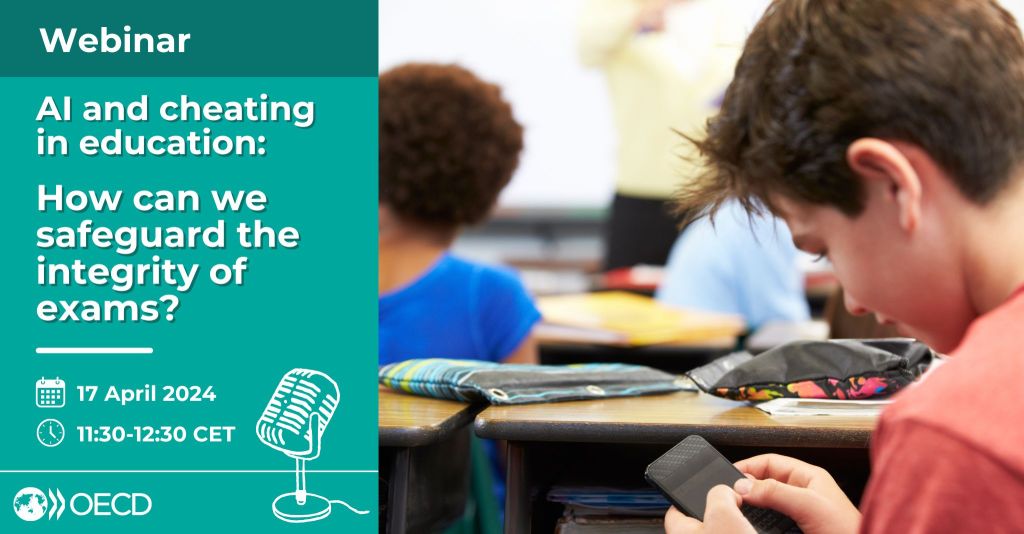
AI and cheating in education: How can we safeguard the integrity of exams?
17 April 11:30-12:30 CET
Cheating in high school exams is an age-old problem, but new technologies have made it easier than ever resulting in huge issues for fairness and credibility. In today’s digitally connected and AI inclusive world, ensuring the integrity of exams is a major challenge. From plagiarism detection software to solutions leveraging facial recognition and eye-tracking technology, various measures are being deployed to combat cheating. But do they work? And do educators need reevaluate how to hold fair exams in a world of previously unimagined unlimited digital resources?
In this webinar, we explored questions surrounding AI and cheating by looking at the shifting dynamics of high-stakes examinations. We discussed OECD research on digitising high-stakes examinations in upper secondary education, examined strategies to make them more secure and debated how they might look in the future.
Speakers included:
- Dr. Phillip Dawson, Professor, Deakin University
- Dr. Christina Wikstrom, Associate Professor, Umeå University
- Shivi Chandra, Policy Analyst, Above & Beyond: Transitions in Upper Secondary Education project, OECD
Moderated by Duncan Crawford, Senior Content Manager, OECD Directorate for Education and Skills.

Advancing Gender Equality: The Crucial Role of Science and Technology
4 April 13:00-14:00 CET
In recent decades, there has been a notable increase in the development of education policies that prioritise gender equality, spanning both during and post-education periods. The question of their effectiveness is subject to ongoing debate. Results from the 2022 Programme for International Student Assessment (PISA) confirm the persistence of gender disparities. For example, girls still outperform boys in reading and boys still have the advantage in mathematics. These examples require deeper inspection.
In this webinar, we explored the nuanced relationship between gender disparities in education and employment and how science and technology are related to a wide variety of jobs in Creative Industries, Financial and Digital Industries as well as in Green jobs.
Speakers include:
- João Costa, Minister of Education, Portugal
- Laura Ripiani, Labor Markets and Social Security Division Chief, IADB
- Diana Zamora, Global Public Policy Director, Mastercard
- Eric Charbonnier, Analyst, Innovation and Measuring Progress Division, OECD
Moderated by Marta Encinas-Martin, OECD Education Gender Ambassador

Launch of the PISA-VET Framework: A Global Milestone in Future-Ready Professional Skills
19 March 11:00-12:00 CET
Vocational Education and Training (VET) plays a crucial role in ensuring that both young people and adults possess the skills required by societies and labour markets. As the global landscape of VET undergoes transformative shifts, so too does the need for a collaborate approach in professional skills measurement. The PISA-VET Framework, a joint effort between 13 countries as well as more than one hundred experts, employers, and international partners, will take centre stage as a beacon of innovation, designed not just to assess, but to guide, inform, and inspire.
Watch the recording as Yoshiki Takeuchi, Deputy Secretary General at the OECD, launched the framework. Following opening remarks, we talked with leading experts to delve into the core of this innovative approach, providing a comprehensive understanding of how together we can redefine the landscape of vocational skills and education.
Speakers include:
- Yoshiki Takeuchi, Deputy Secretary General, OECD
- El Iza Mohamedou, Head of OECD Centre for Skills
- David Hoey, CEO, WorldSkills International
- Hanni Rosenbaum, Executive Director of Business at OECD
- Markus Schwertel, Director for HP Global Policy & Strategy team
- Olga Mironenko Stampfer, Vice President, International Relations at United Health Group
Moderated by Duncan Crawford, Senior Content Manager, OECD Directorate for Education and Skills.

Diversity + Quality = Equity? A complex equation for early childhood education and care
4 March 14:30-15:45 CET
Check out the recording of our Q&A webinar by clicking below and explore the intersection of diversity and quality in Early Childhood Education and Care (ECEC) through OECD’s latest research. Discover correlations between dimensions of diversity and ECEC quality, delve into what aspects of quality matter most for diverse backgrounds, and identify policy priorities for enhanced provision.
The discussion was based on the latest OECD Education Working Papers and reports shedding light on the relationship between diversity and quality.
Speakers included:
- Andreas Schleicher, Director for Education and Skills, OECD
- Michel Vandenbroeck, Ghent University, Belgium
- Alejandra Cortázar, Centro de Estudios Primera Infancia – CEPI, Chile
Moderated by Mihaela Ionescu, ISSA, The Netherlands

The art of balancing curricular choice in upper secondary education
29 February 13:00-14:00 CET
Upper secondary education helps refine the interests and expertise of students, preparing them for future study or careers. Yet in a system that fails to offer sufficient student choice in subject matter, learners may disengage, not reach their potential, or even drop out of school.
In our latest webinar focusing on upper secondary education, we delved into how countries design their curricula, balancing core subjects like literacy and numeracy with the freedom to explore other subjects of interest such as science, literature or economics.
Check out the recording to see us drawing insights from the OECD’s comparative research and hear from policy makers on their country’s experiences as well as lessons learned.
Speakers included:
- Ihor Khvorostianyi, General Director of the School Education Directorate, Ministry of Education and Science, Ukraine
- Fritjof Karlsson, Senior Advisor in a national commission of inquiry, Sweden
- Adeline Croyère, Directrice des lycées et de la formation professionnelle au Ministère de l’éducation nationale et de la jeunesse, France
- Stella Pearson, Deputy Director, Advanced British Standard, UK (England)
- Camilla Stronati, Junior Policy Analyst, Transitions in Upper Secondary Education project, Directorate for Education and Skills, OECD
Moderated by Sasha Ramirez-Hughes, Communication Manager, Directorate for Education and Skills, OECD
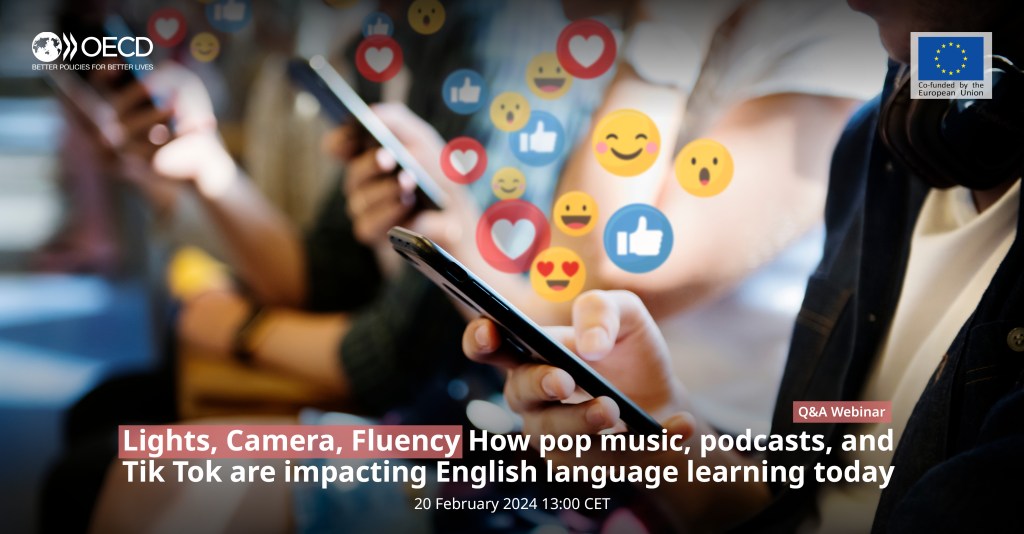
Lights, Camera, Fluency: How pop music, podcasts, and Tik Tok are impacting English language learning
20 February 13:00-14:00 CET
Step into the future of English language education. Beyond timetabled lesson hours, today’s students are immersing themselves in English from an increasingly early age through diverse and exciting new avenues, reshaping the landscape of language acquisition. But with many countries and families investing considerable amounts to ensure students leave school with sufficient language skills, what are the implications of this new English-learning reality for teachers and students?
Our panel, inspired by key findings from the OECD’s research on global English learning which is co-financed by the European Commission, shared insights and discussed implications for today’s education systems.
Speakers included:
- Andreas Schleicher, Director for Education and Skills OECD
- Sophia Eriksson, Director for Youth, Education and Erasmus+, European Commission
- Anna Sole Mena, Senior Expert, European Commission
- Selma Koyuncu, Teacher of English, Puistopolun Comprehensive School, Helsinki, Finland
- Hanan Khalifa, Language testing and evaluation expert
- Stavros Kontos, English language student, 2nd Model General Lyceum of Athens, Greece
Moderated by Sasha Ramirez-Hughes, Communications Manager, Directorate for Education and Skills
Bridging the gap – How countries are using micro-credentials to reshape the workforce
14 February 13:00-14:00 CET
In an era where traditional education and training pathways are being reimagined, micro-credentials – smaller, more targeted, and more flexible education programs – emerge as a solution to the increasing demands for upskilling and reskilling. Recognised as pivotal in facilitating swift skill acquisition, these programmes are gaining momentum globally. But how are countries integrating micro-credentials into their education systems?
This Q&A webinar looked at the findings of the OECD-European Commission ‘Micro-credential Implementation Project’ which explores how OECD countries, particularly Finland, the Slovak Republic, Slovenia, and Spain, are responding to the rise of micro-credentials and how integrating them is re-shaping the landscape of lifelong learning and workforce development.
Speakers included:
- Petri Haltia, Senior Ministerial Adviser, Ministry of Education and Culture, Finland
- Peter Ondreička, Director of Higher Education Department, Ministry of Education, Science, Research and Sport, the Slovak Republic
- Duša Marjetič, Head of Higher Education Division, Ministry of Higher Education, Science and Innovation, Slovenia
- Pedro Martínez Martín, Senior Ministerial Adviser, Ministry of Science, Innovation and Universities, Spain
- Isabel Ladron Arroyo, Policy Officer, Directorate-General for Employment, Social Affairs and Inclusion, European Commission
- Shizuka Kato, Higher Education Policy Analyst, Directorate for Education and Skills, OECD
Moderated by Simon Roy, Head of Higher Education Policy, Directorate for Education and Skills.

Making learning resilient in a changing climate
8 February 12:00-13:00 CET
Climate change is here. Besides continuing to work to reverse emissions growth, we must adapt to its impacts, including on education. This means that not only must learners acquire new skills, but the very structure of education spaces must be reimagined to ensure uninterrupted learning in the face of extreme weather, flooding, and wildfires. Action plans are needed for education during climate emergencies and to ensure equitable access, addressing disparities from varying climate exposures and access to technology.
Drawing on insights from the OECD Skills Outlook 2023, this webinar fostered a dialogue about the infrastructural, curricular, and organisational measures that can empower education and training systems to adapt effectively to the challenges posed by climate change.
Speakers included:
- Mustafa Yesil, National Education Expert, Ministry of National Education, Türkiye
- Francesca Bastagli, Head of Research and Policy, Fondazione Agnelli
- Johannes Klumpers, Senior Expert DG CLIMA, Adaptation and Resilience to Climate Change, European Commission
- Andreas Schleicher, OECD Director for Education and Skills.
It was moderated by Sasha Ramirez-Hughes, Communications Manager, Directorate for Education and Skills.

Decoding the hype: can AI help create accessible and inclusive student learning?
6 February 13:00-14:00 CET
Artificial intelligence (AI) is touted as having the potential to revolutionise the way students learn and teachers teach. Among the benefits, AI can help prepare students for the challenges of the digital age, develop 21st Century skills and provide personalised feedback. However, there are many challenges including the need for technical expertise and ethical concerns. Should we believe the hype?
In this OECD webinar, educators, policy makers and technology developers explored the potential of AI in creating accessible and inclusive learning environments. They discussed personalised learning, examined how AI can support tailored educational experiences that respect diversity in classrooms, and talked about the future impacts of AI in equity and inclusion in education, which forms part of the latest work from the OECD on Digital equity and inclusion in education.
Speakers included:
- Wayne Holmes, Associate Professor at the University College London (UCL)
- Nikol Rummel, Research Professor at the Center for Advanced Internet Studies
- Emile Kroeger, Senior software engineer, United Robotics Group
- Kevin Johnstun, Program Specialist at the US Department of Education
It was moderated by Duncan Crawford, Senior Content Manager, OECD Directorate for Education and Skills.

Research evidence in education serves as a compass, guiding decisions on educational progress, equity and resource optimisation. Overcoming the challenges of harnessing research evidence in education for policy makers and practitioners involves fostering a culture of research engagement, as the OECD’s Strengthening the Impact of Education Research project explores.
In this Q&A webinar we talked about crucial system-level elements, including resources, incentives, structures and processes, and the need for systems approaches to knowledge mobilisation. We discovered real-world examples and insights from our experienced guests, on strategic implementation of systemic enablers, navigating challenges and the influential role played by leaders. We also discussed how communication was like ‘the tango’ and talked about the latest Spotlight Systemic Enablers for a Culture of Research Engagement in Education from the OECD Strengthening the Impact of Education Research project.
Speakers included:
- Matthew Soldner, Commissioner, National Center for Education Evaluation and Chief Evaluation Officer at the U.S. Department of Education
- Makito Yurita, Professor, National Institute for School Teachers and Staff Development, Japan
- Elaine Munthe, Director, Knowledge Centre for Education, Norway
- Vicky Colbert, Executive Director, Fundación Escuela Nueva Volvamos a la Gente, Colombia
- Jordan Hill, Analyst, OECD Centre for Educational Research and Innovation
It was moderated by Tal Malkin, Strengthening the Impact of Education Research project, OECD.
Engaging with education research – With a little help from the system

Social and Emotional Learning – does it make a difference in children’s lives?
Can social and emotional skills be taught? If so, how does this make a difference in the lives of children? What assessment tools can inform education systems about the effectiveness of social and emotional learning to ensure it is making a positive difference in children’s lives?
In this OECD webinar, we looked at the most recent evidence showing social and emotional skills can be effectively taught through educational interventions and the positive impacts they have on various life outcomes, such as academic achievement and mental health. We also discussed the need for assessment in this field – reliable measurement tools which show the effectiveness of social and emotional learning programs targeting young people. Finally we spoke about the OECD Working Paper, ‘Social and emotional skills: Latest evidence on teachability and impact on life outcomes.
Speakers included:
- Bo Stjerne Thomsen (Head of Educational Impact, LEGO Education)
- Jennifer Adams (Karanga – Global Alliance for Social Emotional Learning and Life Skills)
- Adriano Linzarini (Lead Analyst, Rethinking Assessment of Social and Emotional Skills project, OECD)
- Poonam Borah (UNESCO Mahatma Gandhi Institute of Education for Peace and Sustainable Development)
It was moderated by Daniel Catarino da Silva, OECD.